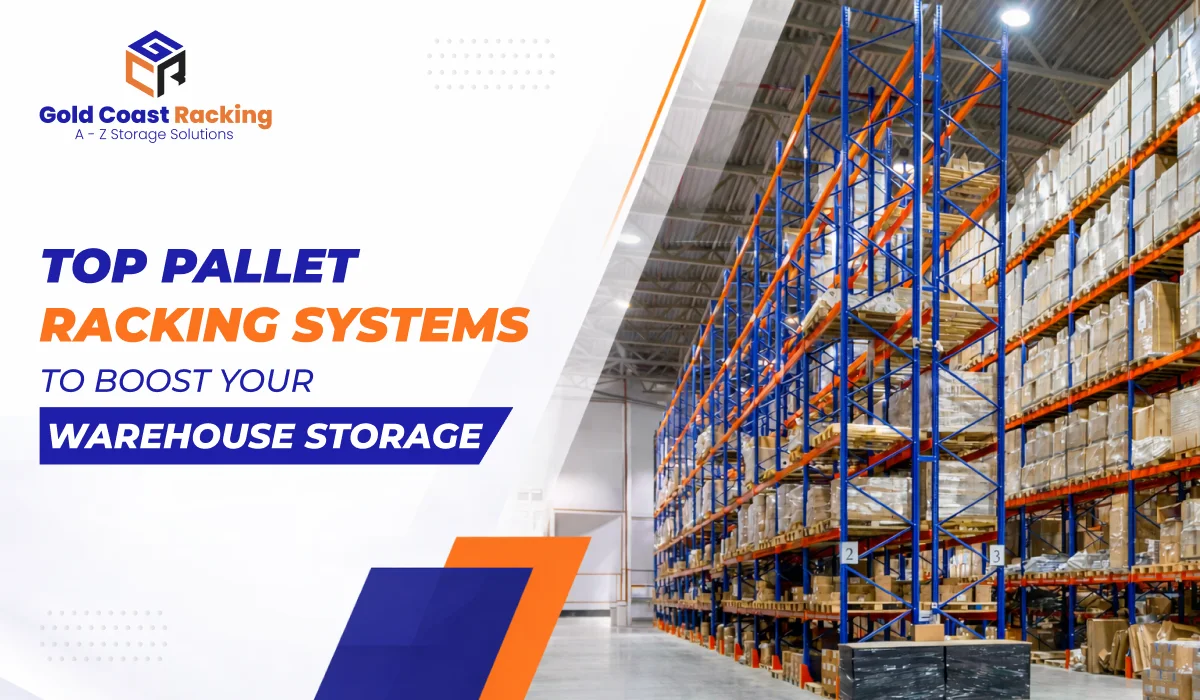
At first glance, a warehouse might just look full. But spend a few minutes there, and the problems start to show. Workers walk back and forth to find items, pallets placed wherever they fit, and the overall space that feels used but not really optimised. It slows everything down more than people realise.
This is where pallet racking comes into play. With the right industrial pallet racking and a well-planned pallet racking setup, cluttered spaces can be organised better.
In this blog, we’ll look at top pallet racking systems for Australian warehouses and how they improve storage efficiency and make things easier for us:
Key Insights:
• Pallet racking helps expand warehouse storage solutions by organising space and improving access.
• Well-designed pallet racking systems improve efficiency in warehouses and lead to smoother daily operations.
• Storage racking solutions help maximise warehouse storage with pallet racking without expanding space.
• Understanding pallet racking benefits helps businesses choose cost-effective pallet racking solutions in Australia.
• Businesses can buy pallet racking in Australia through trusted providers like Gold Coast Racking.
What are pallet racking systems and why are they important?
Think about a warehouse where pallets are just stored on the floor. It works for a while. But then, it becomes a mess as things become hard to find and difficult to move around.
Pallet racking fixes that. They are basically strong and structured frames that let you store pallets in rows and levels instead of piling everything up.
So instead of having to guess where something is, you know exactly where it’s placed. It saves space, makes movement easier, and just brings some order to what would otherwise turn into chaos.

Why are pallet racking systems important:
• Better organisation: Pallet racking systems keep goods structured and easy to locate. They help reduce confusion and save time during daily warehouse operations.
• Maximum space usage: They use vertical space skillfully helping store more items without needing to expand the warehouse area.
• Improved safety: Proper warehouse pallet racking reduces mess up and unstable stacking. It decreases the risk of accidents and damage.
• Faster workflow: Pallet racking makes it easier to move, load and collect pallets. This ends up improving overall efficiency and reduces manual effort.
• Better inventory control: With everything in place business can track stock easily and avoid delays, errors, or misplaced items.
Top pallet racking systems for warehouses:
When you walk through a disorganized warehouse, the issues are easy to notice. Pallets are stacked unevenly. Some goods are pushed into corners while others leave unused gaps. Tight aisles make movement difficult, and workers keep adjusting loads to access items.
It feels crowded yet unorganised. The way in which pallets are stored directly affects efficiency, space usage, and overall safety.
Here are some of the pallet racking systems that helps to solve these kinds of issues:
1. Selective pallet racking
You’ll see selective pallet racks in almost every warehouse out there. In this system, every pallet has its own spot. You won’t really have to move anything else just to access your goods.
It also allows easy inventory checks and quick access for fast daily operations and management efficiency.
2. Drive-in pallet racking
This setup is more compact. Forklifts actually go inside the racks to place pallets, which works well when you’re storing the same kind of goods in bulk.
It maximizes warehouse density, but requires careful forklift operation and demands more resources like forklift operators. You will also need to adhere to relatively stricter safety measures to run efficiently.
3. Push-back pallet racking
In this system, goods are placed on a rolling system and move back as new ones are added. It helps use space better without making the setup too complicated.
This system reduces aisle usage while improving loading speed and overall storage.
4. Pallet flow racking
This pallet racking system uses rollers to store pallets. This leads to pallets slowly moving forward on their own. It’s useful in places where things are constantly moving and speed matters.
It also supports first-in first-out inventory and reduces manual handling.
5. Cantilever racking
You’ll usually see this type of racking for long or bulk items like pipes or wooden boards, usually where normal racks don’t make sense.
It provides open front access and adjustable arms for handling irregular loads safely.
6. Double deep pallet racking
In this format, pallets are stored in two rows instead of one. It increases storage but reaching the back pallets takes a bit more effort.
While this does improve space usage, it requires specialised forklifts for deeper access and careful handling practices.
Read More: Questions About Pallet Racking
How to choose the right pallet racking system?
Choosing a pallet racking system is about how your warehouse feels when it’s working everyday and how fast things move. It also includes how easy it is to reach the stock and how much stress your layout removes from your team.
Wondering ‘how to identify the best type of pallet racking?’ These tips might help:
• Understand what you’re storing
Before anything else, look at your goods. Are they mixed items you pick daily or are they bulk storage?
If everything is different and constantly accessed, selective pallet racking fits naturally. Each pallet has its own clear spot, just like how books are placed in separate shelves where you can grab one without distributing rest.
• When everything is stored in bulk
Now picture a situation where the same product is stacked again and again. But instead of using the full depth of your space, everything is spread out.
This is where compact systems like drive-in or push-back racking come in. Drive-in lets forklifts go deep inside rows, almost like entering a tunnel of pallets.
Push-back works more like layers with each new pallet slides the previous one back.
• When movement feels chaotic
Think about fast-moving stock. Items coming in, going out, and somehow older stock still gets left behind. Pallet flow racking changes that.
Pallets move forward on rollers on their own, so the oldest one is always at the front.
• When spaces starts feeling small
You know that feeling when your warehouse suddenly feels full even when it shouldn’t be? Double deep racking helps in this situation as instead of one row, you can store pallets deep.
This helps fit more in the same area. But, the only catch is reaching the back pallet takes an extra step, and this is something that might not work for every warehouse.
• When nothing fits properly
Awkward stuff like long pipes, wooden planks or metal rods, things that don’t sit neatly anywhere. Cantilever racking handles this situation.
No front required, just open arms holding everything in place making loading and unloading very much easier.
Conclusion:
At the end of the day, warehouses don’t struggle because they lack space, they struggle because the space isn’t used the proper way. What looks ‘full’ is often unorganised, and shows a poor warehouse pallet racking setup.
The right pallet racking systems can completely change how a warehouse works. They improve flow, increase capacity and better organisation. This setup makes a visible difference in daily efficiency.
If you’re planning to buy pallet racking in Australia, it’s important to look above the price and focus on long term safety.
Many businesses turn to trusted providers like Gold Coast Racking for reliable pallet racking solutions in Australia.
Frequently asked questions:
1. What are thebest pallet racking systems for warehouses in Australia?
The best pallet racking systems depend on your warehouse selection. A warehouse audit helps in determining the best system for you.
2. How does pallet racking improve warehouse storage efficiency?
Pallet racking improves the ability by organising space, making items easier to find. It also helps reduce movement and helps workers complete tasks faster.
3. What types of pallet racking are available for Australian warehouses?
The most common types of pallet racking include selective, drive-in, push back, pallet flow, cantilever and double deep racking. Each of these are acceptable for different storage and access needs.
4. How do I choose the right pallet racking systemfor my warehouse?
Choose the correct pallet on the basis of your stock type, space, and movement speed. How often you access items is also a factor to consider so that your setup actually supports daily operations.
5. What are the safety tips for using pallet racking?
Some of the common safety tips for using pallet racing include: Sticking to weight limits, keeping racks stable, and training staff properly. Make sure that you maintain clear aisles and inspect regularly to prevent accidents.
6. How much does pallet racking cost in Australia?
Costs vary based on your stock type, space, and material. With that, investing in good quality racking saves money for the long term as it leads to improved storage and efficiency.
7. Where can I buy high-quality pallet racking in Australia?
Get pallet racking in Australia from reliable suppliers such as Gold Coast Racking. They stock a variety of options for every warehouse out there.
