The cattle yard is where most hands-on work happens: drafting, drenching, vaccinating, weaning and loading. It’s also where things go wrong fastest. A panicked steer, a gap in a panel or a gate swinging the wrong way can lead to bruised cattle, lost weight, a broken arm or worse in a matter of seconds.
Most yard injuries aren’t bad luck. They come from a handful of predictable causes, including poor layout, worn or weak equipment, slippery ground and rushed handling. Fix those and the yard becomes calmer, quicker and safer for everyone. If you’re planning new yards or upgrading old ones, safety is worth building in from the start, before you buy cattle yard panels and gates.
Key Insights
- Calm cattle are safer cattle. Most injuries happen when cattle panic, baulk or push back.
- Layout drives behaviour. Curved races, solid sides and good lighting keep cattle moving without force.
- Weak or damaged panels cause injuries. Gaps, sharp edges and broken rails hurt cattle and let them escape.
- Handlers need escape routes. Every working area should have a quick way out.
- Footing matters. Mud and smooth concrete lead to slips, falls and leg injuries.
- Regular checks prevent accidents. A few minutes of inspection before each muster can stop a serious injury.
Why Injuries Happen in Cattle Yards
Cattle are big, strong prey animals with a strong flight instinct. When they feel trapped, confused or pressured, they try to escape, and that’s when they crash into panels, slip, pile up in corners or turn on the people around them.
The most common causes of injury include:
- Poor yard layout with sharp corners, dead ends or races that are too wide
- Damaged equipment such as bent rails, protruding bolts, broken latches and sagging gates
- Slippery or uneven ground in races, forcing pens and loading areas
- Rushed or loud handling using shouting, dogs or electric prodders too heavily
- Overcrowding: too many heads in a pen or forcing area at once
- Handlers standing in the wrong place in the flight zone or inside pens with no exit
Many of these problems are built in from day one, which is why a well-planned cattle yard layout and design is the first step to a safer yard.
Yard Design Changes That Reduce Injuries
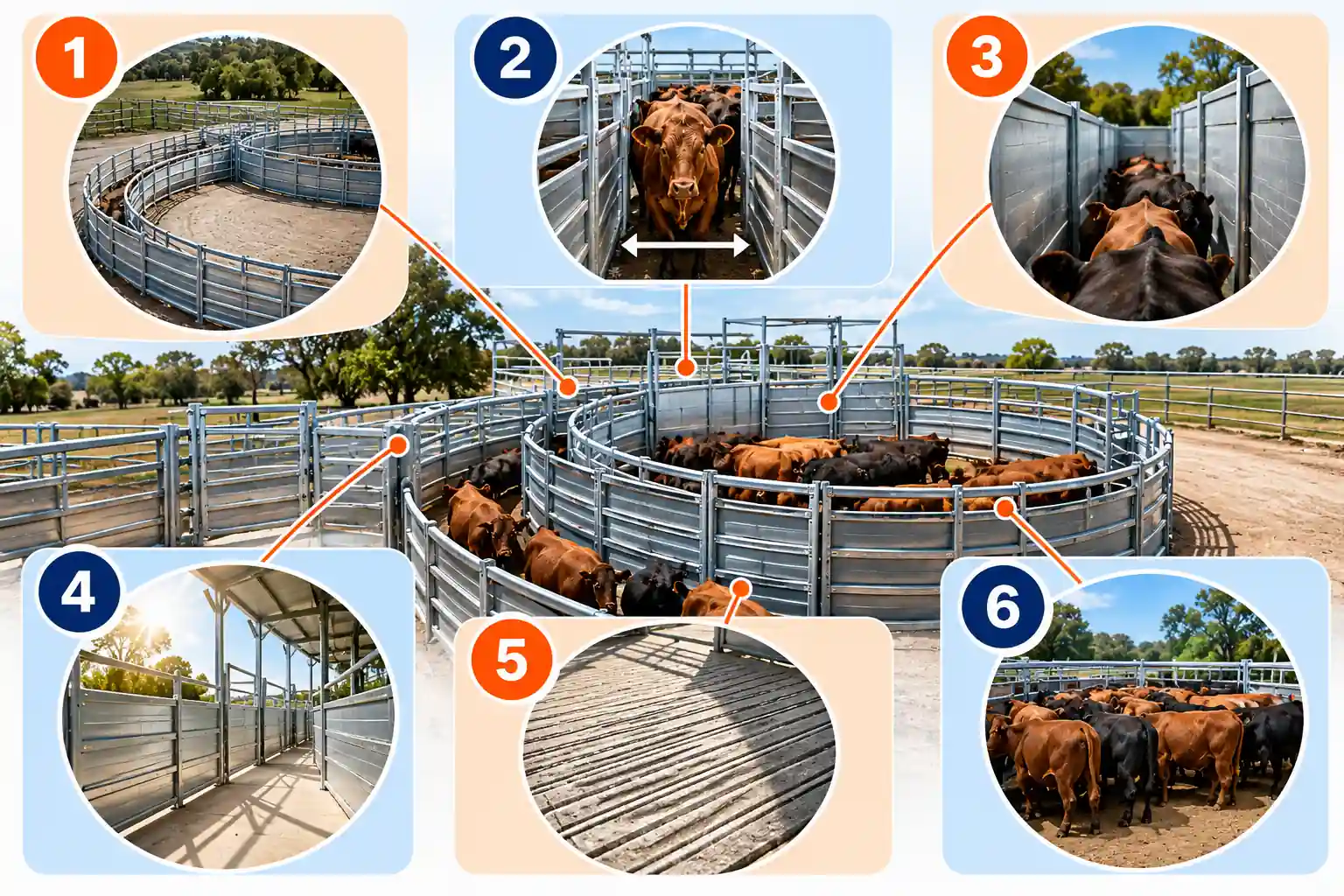
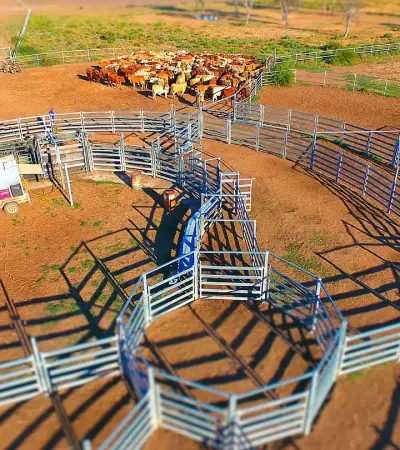
Use curved races and round forcing pens.
Cattle move more willingly when they can’t see what’s waiting at the end of the race. A gently curved race uses their natural tendency to circle back to where they came from, and a round or bugle-shaped forcing pen avoids the square corners where cattle jam and pile up.
Get the Race Width Right
A race that’s too wide lets cattle turn around, which leads to pushing, pile-ups and handlers getting caught. A race that’s too narrow causes bruising and baulking. Size the race to suit the type and size of cattle you handle most.
Add Solid Sides Where Cattle Need Focus
Solid or sheeted sides in the race and forcing the pen to block out distractions such as people, dogs and vehicles. Cattle stay calmer and move forward instead of trying to turn towards what they can see.
Remove Shadows and Distractions
Cattle often stop at sudden changes in light, shadows across the ground, puddles or loose objects flapping in the wind. Position the race so cattle aren’t walking straight into the sun, and keep the working area free of clutter.
Improve Footing
Slips and falls cause many leg and hip injuries. Use grooved or textured concrete in races, crushes and loading areas, and make sure the yard drains well so pens don’t turn into deep mud after rain.
Size Pens for Your Herd
Overcrowded pens increase pushing and kicking, while oversized pens make cattle harder to move. Choosing the right cattle yard size for your herd keeps pressure on the animals at a safe, workable level.
Choose Equipment That Protects Cattle and Handlers
Strong, Smooth Panels
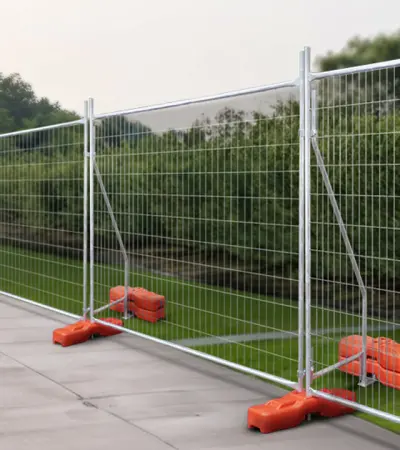
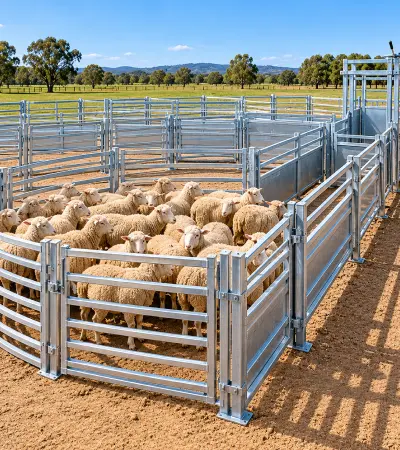
Panels need to hold firm when a heavy beast pushes against them. Look for heavy-gauge rails, solid welds and a smooth finish with no sharp edges, exposed wire or protruding bolts that can cut hides or catch legs. Galvanised panels also resist rust, so they stay strong and smooth for longer.
Panels Tall Enough for Your Cattle
Panels that are too low invite cattle to jump or climb, which often ends with injured animals and damaged yards. Choose panel heights to suit your breed, temperament and the work you do in each area. Forcing pens and races usually needs the most height.
Safe, Reliable Gates
Gates should swing freely, latch securely and be easy to operate with one hand from a safe position. Sagging or dragging gates slow work down and tempt handlers to climb or reach into pens, so heavy-duty cattle yard gates with reliable latches are worth the investment.
Proper Restraint Equipment
A well-built crush and headbail holds cattle firmly while they’re treated, which protects both the animal and the person working on it. Trying to vaccinate or tag cattle loose in a race is one of the most common ways handlers get kicked or crushed.
Man Gates and Escape Points
Include pedestrian gates or gaps that only people can fit through at key points, especially in forcing pens, races and around the crush. They give handlers a quick exit without opening a full gate.
Handling Practices That Keep Everyone Safe
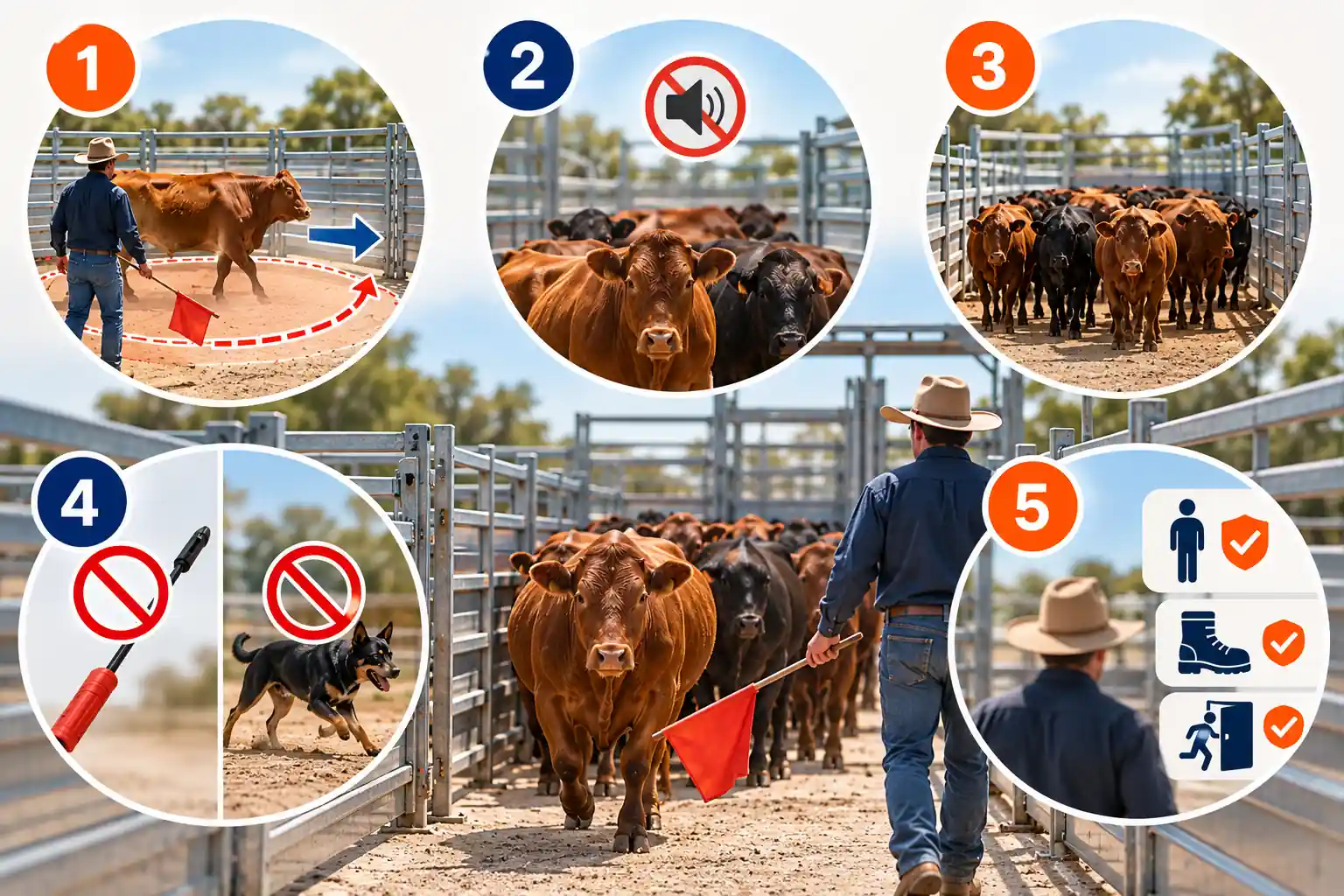
Work With the Flight Zone
Every animal has a flight zone, the space around it where it starts to move away from a person. Stepping into the edge of that zone moves cattle forward, while pushing too deep makes them panic. Learning to use the flight zone and the point of balance at the shoulder lets you move cattle with far less force.
Keep It Quiet and Slow
Shouting, banging and rushing raise stress and make cattle unpredictable. Calm, steady pressure gets cattle through the yard faster in the end, with fewer injuries and less bruising.
Move Small Groups
Cattle follow each other, so moving small groups into the forcing pen works better than cramming in large mobs. Smaller groups also reduce crushing and give handlers more room to work.
Limit Electric Prodders and Dogs
Use paddles only as a last resort, and keep dogs out of tight areas like races and forcing pens, where frightened cattle have nowhere to go.
Protect the People
Handlers should:
- Never stand directly behind cattle, or in a gateway; cattle may rush through.
- Always know where their nearest exit is.
- Avoid working alone with cattle in a pen.
- Wear sturdy boots and suitable protective gear.
- Stay alert around stressed cows, cows with calves and bulls
Good habits like these are the foundation of safe cattle handling practices, and they cost nothing to put into practice.
Cattle Yard Safety Checklist
A quick walk-around before each use can stop most equipment-related injuries. Check for:
- Bent, cracked or broken rails
- Sharp edges, exposed wire or protruding bolts
- Loose or missing pins, clamps and joiners
- Gates that sag, drag or don’t latch properly
- Rust weakening posts, welds or panel bases
- Gaps between panels that legs or heads could slip through
- Slippery, muddy or uneven ground in races and pens
- Crush and headbail moving freely and locking securely
- Clear escape routes and working man gates
Repair or replace damaged parts before cattle go through the yard. A bent panel that gets used “just one more time” is often how a serious injury happens.
Conclusion
Reducing injuries in the cattle yard comes down to three things: a layout that works with cattle behaviour, strong equipment in good condition, and calm, careful handling. Curved races, solid sides, good footing, secure gates and clear escape routes all make a real difference, both for the welfare of your cattle and the safety of the people working them.
If you’re building new yards or replacing worn ones, Gold Coast Racking supplies galvanised cattle yard panels, gates and accessories to help you set up a safer, more efficient yard.
Frequently Asked Questions
What causes most injuries in cattle yards?
Most injuries come from cattle panicking or being pushed too hard, combined with poor layout, damaged equipment or slippery ground. Handlers are often hurt when they stand in the wrong position or have no quick way out.
How can I reduce bruising in cattle?
Use smooth, well-maintained panels with no sharp edges, avoid overcrowding, keep handling quiet and slow, and limit electric prodders. A race of the right width and good footing also helps prevent bruising.
What is the safest cattle race design?
A curved race with solid sides and the correct width for your cattle is generally the safest. It keeps cattle calm and moving forward and stops them turning around.
How high should cattle yard panels be?
It depends on your breed, temperament and the area of the yard. Races and forcing pens usually need taller panels than holding pens, because cattle are under more pressure there.
Why are man-gates important in cattle yards?
Man gates give handlers a fast escape route without opening a full gate. They should be placed in high-risk areas such as forcing pens, races and around the crush.
How often should cattle yards be checked for safety?
A quick walk-around before each use is a good habit, with a more thorough check of panels, gates, latches and footing on a regular schedule.
Does low-stress handling really make a difference?
Yes. Calm cattle move more predictably, are less likely to injure themselves or handlers, and suffer less bruising and weight loss.