
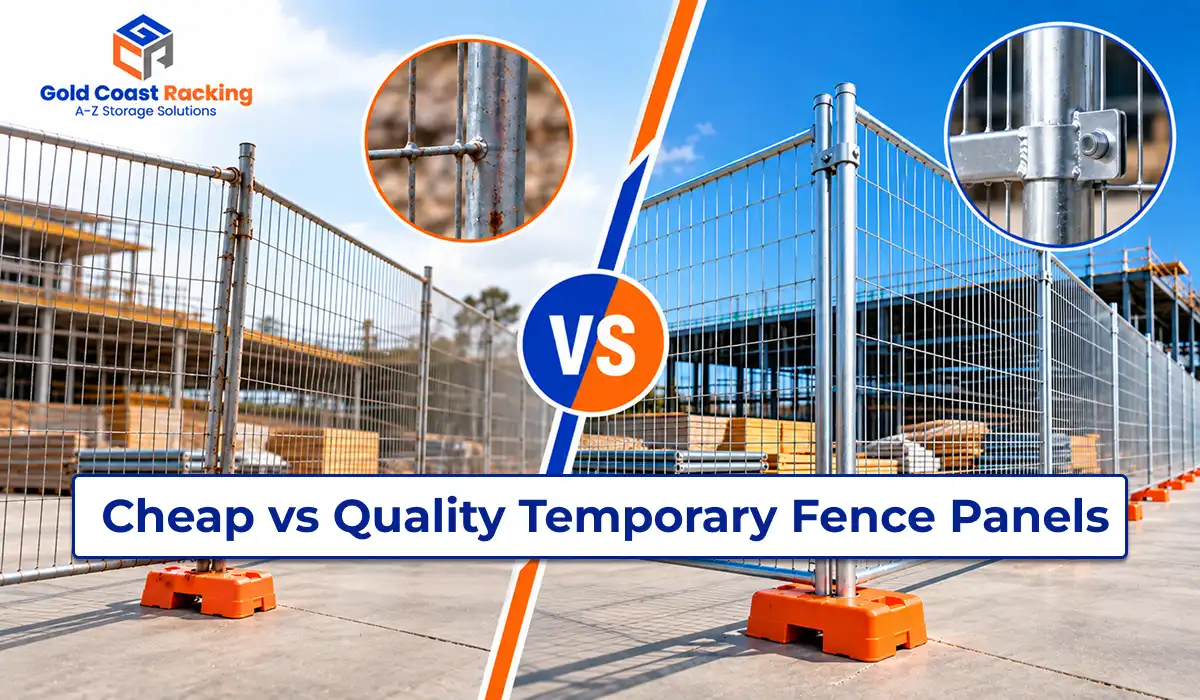
Two temporary fence panels can look almost identical in a product photo: same size, same mesh pattern, same silver finish. Yet one might cost noticeably less than the other, and on a large order that gap adds up quickly. So it’s fair to ask whether you’re paying extra for nothing, or whether quality temporary fence panels really are different.
Most of the difference hides in details you can’t see in a listing photo: wire thickness, frame strength, weld quality and galvanising. Those details decide whether your fence stands up to wind, survives years of being loaded on and off trucks, and keeps your site safe. If you’re still weighing up your overall options, this guide to choosing temporary fencing is a good place to start. Here, we’ll focus on what separates cheap panels from well-made ones, so you can compare prices with confidence.
Key Insights
- Most of the difference is invisible in photos. Wire thickness, frame strength, welds and galvanising separate cheap panels from quality ones.
- Thicker steel lasts longer. Panels with 3mm wire and heavier frames resist bending far better than lighter 2.5mm panels.
- Galvanising after welding matters. It protects the joins, which is where cheap panels usually rust first.
- The whole system counts. Weak feet, clamps or stays can make even good panels unstable.
- Compare cost per use, not price per panel. Quality temporary fence panels often work out cheaper over their lifetime.
- Safety standards apply. Temporary fencing in Australia is covered by AS 4687, revised in 2022.
Why Temporary Fence Panels Vary So Much in Price
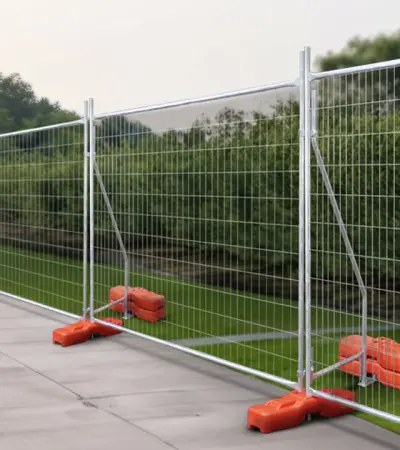
Most temporary fencing panels sold in Australia follow the same basic design: welded steel mesh inside a tubular frame, usually around 2.4m long and 2.1m high, standing in feet and joined with clamps. Because the format is so standard, some manufacturers compete on price by trimming material where buyers are unlikely to notice.
Slightly thinner wire, a lighter frame tube, fewer welds, a thinner zinc coating. Each saving is small, but together they can take a meaningful amount off the price of a panel. The problem is that every one of those savings also comes off the panel’s strength and lifespan.
The Key Differences Between Cheap and Quality Temporary Fence Panels
Wire Thickness and Mesh
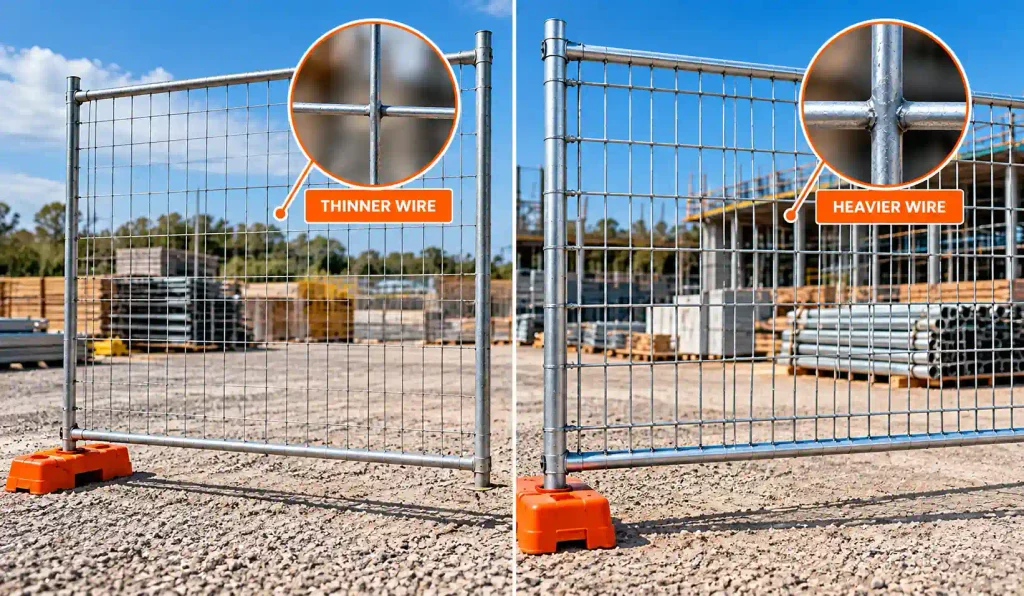
Wire diameter is one of the easiest ways to compare panels. Budget panels commonly use around 2.5mm wire, while heavier-duty panels use 3mm or thicker. Half a millimetre doesn’t sound like much, but thicker wire resists bending, cutting and kicking far better, and it holds its shape after repeated handling.
Mesh spacing matters too. Tighter mesh is harder to climb and harder to reach through, which makes a real difference for temporary security fencing around sites with tools and machinery.
Frame Tube and Welds
The outer frame carries most of the load when wind pushes on the fence or someone leans against it. Cheaper panels often use a smaller or thinner-walled tube, which is how you end up with portable fence panels that bow in the middle or bend at the corners after a few jobs.
Check the welds as well. A quality panel has clean, consistent welds at regular points where the mesh meets the frame. A cheap one may have skipped welds, spatter or joins that crack when the panel is dropped. Once the mesh starts pulling away from the frame, that panel won’t last long.
Galvanising and Rust Resistance
Galvanised temporary fencing is the industry norm because zinc protects steel from rust. That matters a lot for temporary fencing in Queensland, where humidity, coastal air and summer storms are hard on bare steel. But not all galvanising is equal.
Panels that are hot-dip galvanised after welding have zinc covering every surface, including the welds. Some cheaper panels are made from pre-galvanised wire and tube and then welded, which burns the coating off at the joins. Those joins are exactly where rust appears first.
Temporary Fence Feet, Clamps and Stays
A panel is only as stable as the system holding it up. Temporary fence feet come in plastic versions, usually filled with sand or water, and concrete-filled versions, which are heavier and generally more stable. Lightweight or brittle feet crack, tip or shift, especially on uneven ground.
Temporary fence clamps are another place where corners get cut. Thin clamps with poor threads loosen, strip or rust, leaving gaps that let panels lean or separate. Fence stays brace the fence against wind and are essential on exposed sites or when shade cloth and banners are attached.
Temporary Fencing Gates
Gates take more abuse than any other part of the fence line because they’re opened and closed all day. Poorly made temporary fencing gates sag, drag on the ground or won’t latch. Quality gates use sturdier frames and hinges, and wide vehicle gates often have wheels to take the weight off the hinges.
Cheap vs Quality Temporary Fence Panels at a Glance
| Feature | Cheap panels | Quality panels |
| Wire thickness | Often around 2.5mm | 3mm or heavier |
| Frame | Thinner tube, bends easily | Heavier tube, holds shape |
| Welds | Inconsistent, can crack | Clean and regular |
| Galvanising | Thin or burnt off at welds | Even, full coverage |
| Wind stability | More likely to topple | More stable with correct feet and stays |
| Lifespan | Often short with regular use | Many years of reuse with care |
| Long-term cost | Low upfront, higher replacement costs | Higher upfront, lower cost per use |
Are Cheap Temporary Fence Panels Worth Buying?
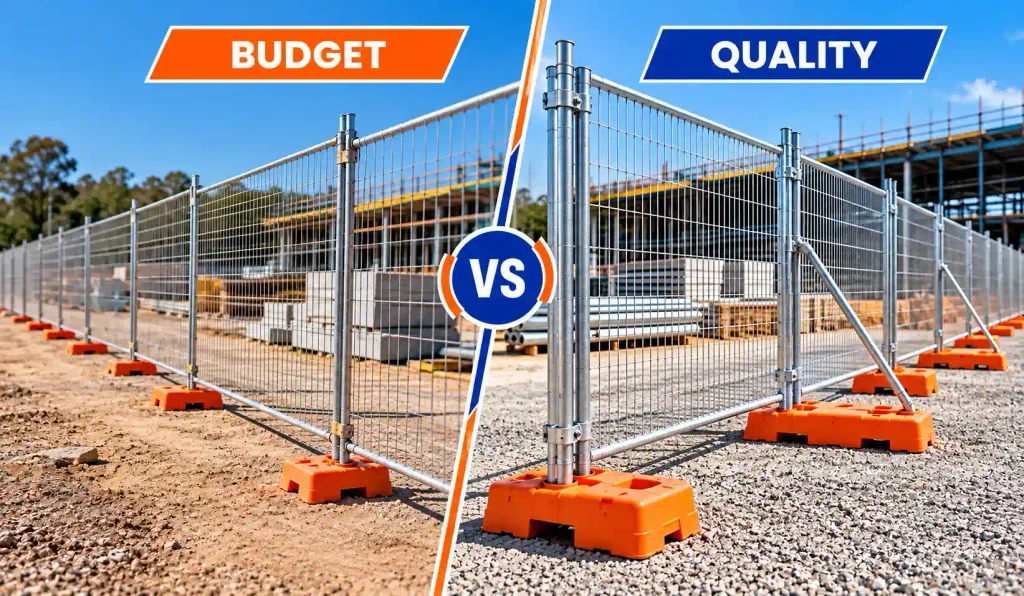
Sometimes, yes. For a short, one-off job in a sheltered spot, where panels won’t be moved much and nobody relies on them for security, budget panels can do the job.
The picture changes when the fence has to work hard. On construction sites, at events, or anywhere panels are installed, removed and transported regularly, cheap panels tend to bend, rust and break sooner. Every damaged panel means a replacement cost, plus time spent sorting and reinstalling. The benefits of using temporary fencing, such as security, safety and clear site boundaries, only hold up if the fence itself does.
How Long Do Temporary Fence Panels Last?
There’s no single answer, because lifespan depends on handling, weather and storage. Well-made galvanised panels that are stacked properly and handled with care can be reused for many years. Cheap panels treated the same way may start rusting at the welds or bending out of shape much sooner.
Temporary fencing durability comes down to three things: the steel, the galvanising and how panels are treated between jobs. You control the last one. The first two are decided the day you buy.
Temporary Fencing Safety and Compliance
Temporary site fencing isn’t just about keeping people out. It also has to stay standing. A panel falling onto a footpath, a car or a worker is a serious risk, and wind is the most common cause.
In Australia, temporary fencing is covered by AS 4687, which was revised in 2022 and is now split into several parts. Part 2, AS 4687.2:2022, deals specifically with temporary fencing and temporary pedestrian barriers. When buying for professional use, ask temporary fence suppliers what their system has been designed or tested to, and what feet, stays or ballast your site conditions need. Correct temporary fencing installation matters just as much as the panels themselves.
Quality panels don’t guarantee compliance on their own, but they give you a far more reliable starting point than lightweight panels that bend under load. For more on site requirements, see this guide to temporary fencing for construction sites.
What to Check Before Buying Temporary Fence Panels
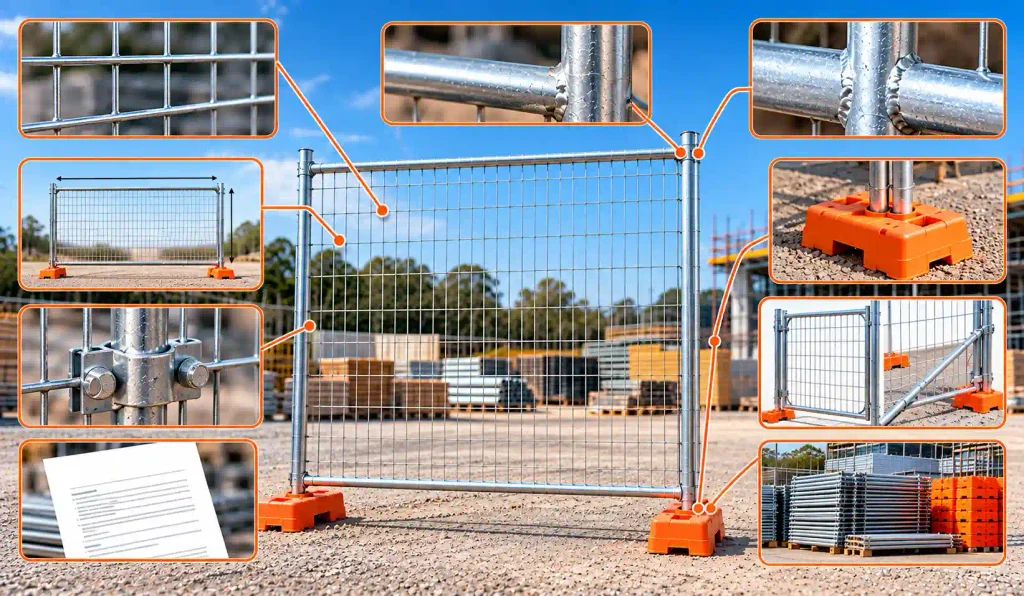
When comparing temporary fence panels for sale, ask for these details instead of relying on photos:
- Wire diameter and mesh spacing
- Frame tube size and wall thickness
- Whether panels are hot-dip galvanised after welding
- Panel dimensions and weight
- Type and weight of the feet
- Clamp material and design
- Matching gates, stays and accessories
- Which standard the fence system is designed or tested to
- Local stock for replacements and extra panels
A supplier who answers these questions clearly is usually worth dealing with. Vague answers are a warning sign. To see what well-specified panels look like, you can compare temporary fencing for sale Queensland options side by side.
Comparing Temporary Fencing Costs the Smart Way
The cheapest quote per panel isn’t always the cheapest fence. A better way to compare temporary fencing costs is cost per use. A panel that costs a little more but lasts through many more jobs works out far cheaper than one you replace after a few months.
Compare the whole temporary fence system, too: panels, feet, clamps, stays, gates and delivery. Some quotes look low only because the accessories are extra or lower grade. If you’re still deciding whether a temporary setup is right for your project, this comparison of temporary fencing vs permanent fencing covers the trade-offs.
For builders and businesses that need quality temporary fencing for construction sites on a regular basis, owning panels often beats hiring over time. If that sounds like you, it’s worth choosing to buy temporary fencing in QLD from a local supplier, so extra panels and replacement parts are never far away.
Conclusion
Cheap and quality temporary fence panels can look alike at first glance, but the difference shows up over time in bent frames, rusted welds, loose clamps and fences that won’t stay upright in the wind. For short, low-risk jobs, a budget option may be enough. For construction site fencing, events and any fence that has to work hard, quality panels are the safer and more cost-effective choice.
Before you buy, check the wire, frame, galvanising and accessories, and compare cost per use rather than price per panel. For durable temporary fencing solutions in Queensland, Gold Coast Racking supplies temporary fence panels, feet, clamps, stays and gates to help you build a fence system that lasts.
Frequently Asked Questions
What is the difference between cheap and quality temporary fence panels?
The main differences are wire thickness, frame strength, weld quality and galvanising. Quality panels use heavier steel and better rust protection, so they stay straight, resist corrosion and last through more jobs than cheap panels.
Are cheap temporary fence panels worth buying?
They can suit short, low-risk jobs in sheltered areas. For construction sites, events or regular reuse, cheap panels often bend and rust sooner, so replacement costs usually outweigh the upfront saving.
What should I check when comparing temporary fence panels?
Check wire diameter, frame tube size, weld quality, galvanising method, panel weight, and the quality of feet, clamps and gates. Also ask which standard the fence system is designed or tested to.
How does panel construction affect temporary fencing durability?
Thicker wire and heavier frames resist bending, while consistent welds stop the mesh pulling away from the frame. Together, they help panels keep their shape through repeated installation, transport and bad weather.
Why is galvanised steel commonly used for temporary fence panels?
Galvanising coats the steel in zinc, which protects it from rust. Panels galvanised after welding have full coverage, including the joins, making them better suited to humid and coastal conditions.
What accessories are needed for a temporary fence system?
A complete system usually includes panels, feet, clamps and stays, plus pedestrian or vehicle gates for access. Shade cloth or banners may also be added, but they increase wind load, so extra bracing is often needed.
How can quality temporary fencing improve site safety?
Stronger panels and stable feet are less likely to topple in wind or bend under pressure. That protects workers and the public, keeps unauthorized people out and helps sites meet their safety obligations.
Where can I buy quality temporary fence panels in Queensland?
Look for a local Queensland supplier that keeps panels, feet, clamps, stays and gates in stock and can give you clear product specifications. Buying locally also makes it easier to add panels or replace parts quickly.