


Purchasing the right pallet racking system is critical for your warehouse’s efficiency. You need a system that fits your operational needs perfectly, without being upsold on unnecessary features by suppliers.
Pallet racking brings a lot with it including its various types and their specific use cases. And since they include a good chunk of investment, they should be done right.
Well, to make sure you don’t make the mistakes you regret later and have the right knowledge we have come up with a comprehensive guide to guide you through this process.
Let’s get right to it:
What is pallet racking and why is it the preferred storage solution?
Before jumping onto the factors one should know while purchasing pallet racking, let’s first have a look at what pallet racking is and why most warehouse owners or even those trying to set up a warehouse inventory rely mostly on it.
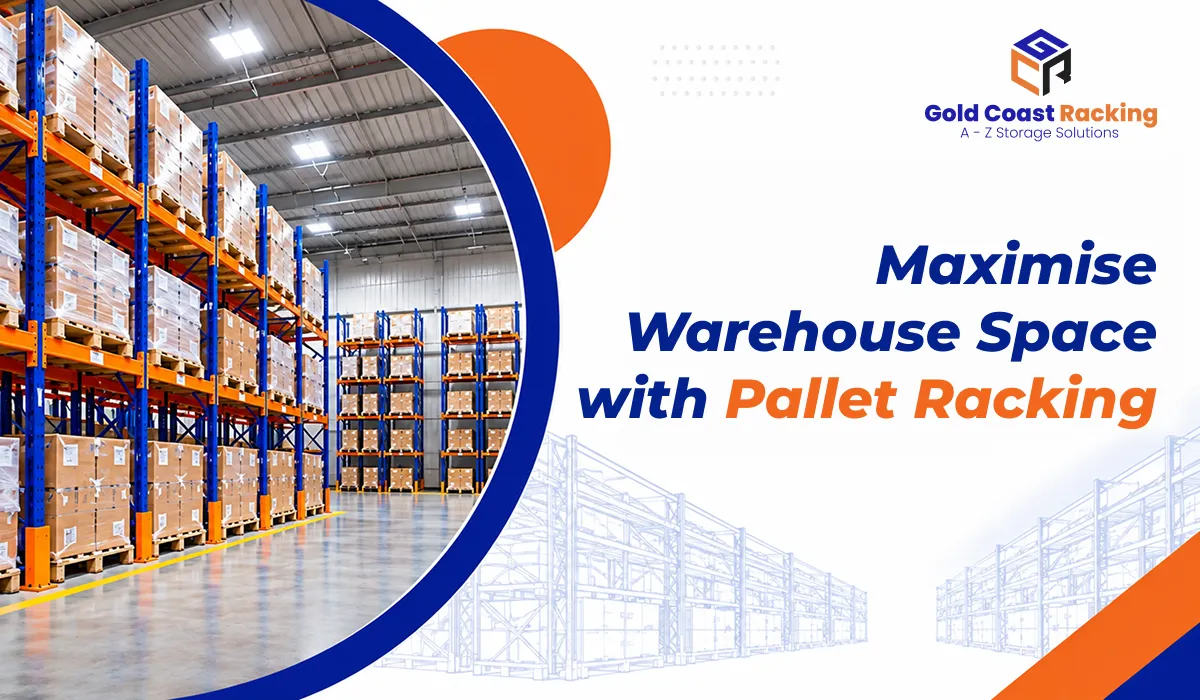
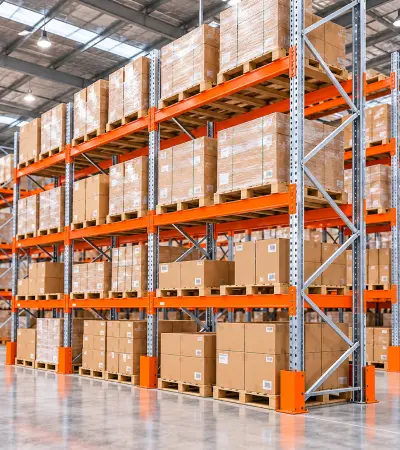
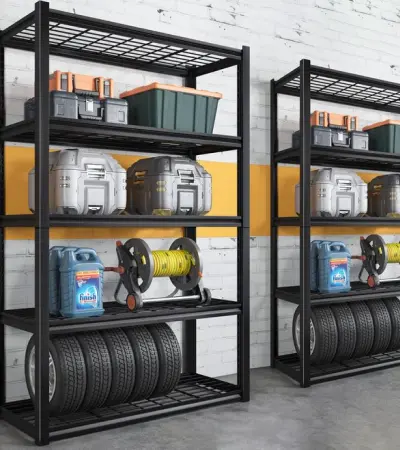
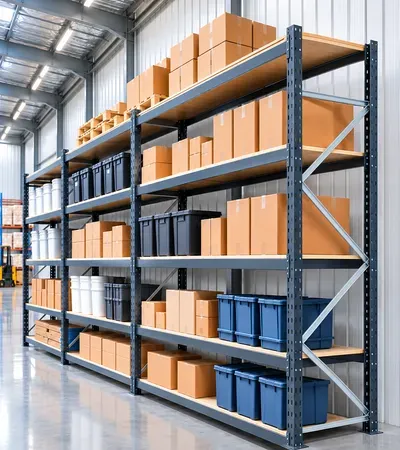
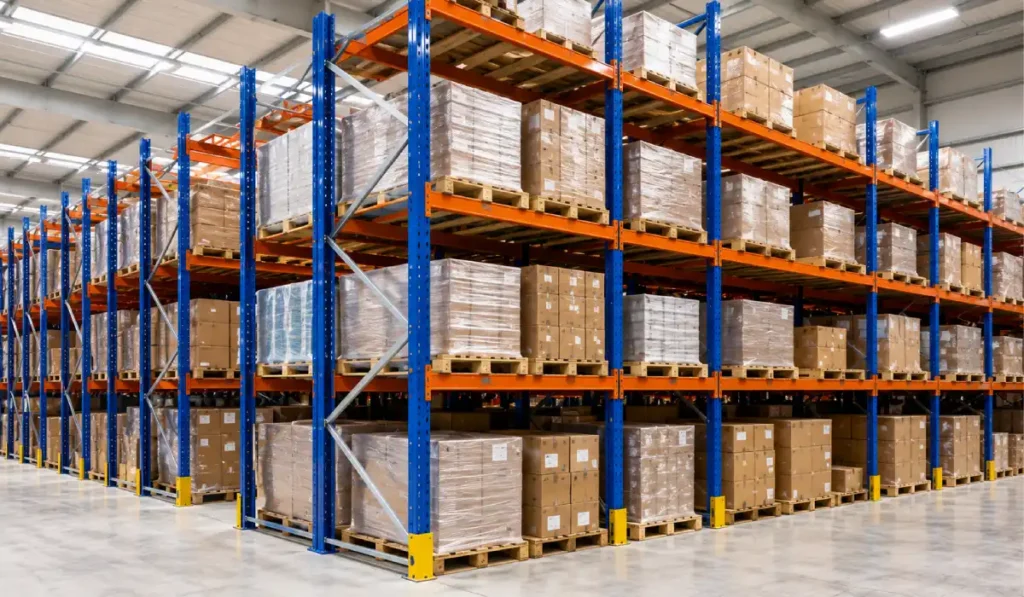
Pallet racking is a type of storage system used to store goods with the help of pallets in a warehouse. You may have seen those horizontal rows and vertical columns – that is precisely the arrangement of a pallet racking.
Now, let’s see why pallet racking remains the industry standard for maximizing warehouse efficiency:
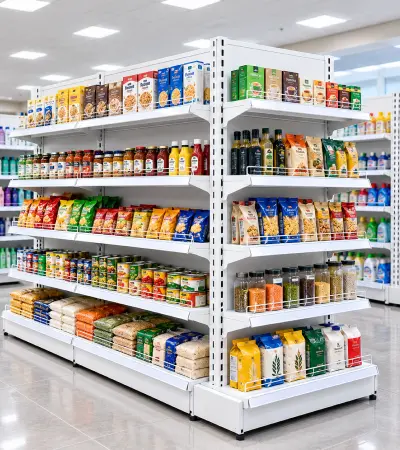
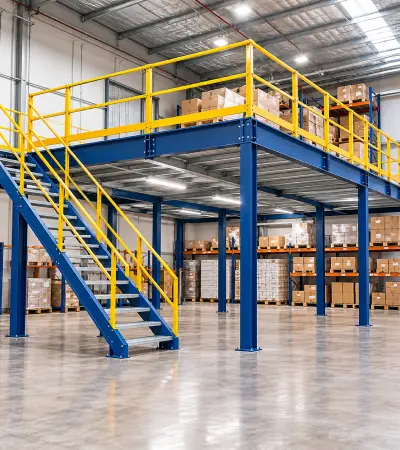
- Maximizing space: Pallet racking offers its ability to maximise vertical space. Every owner wants to store as much goods as the warehouse space can accommodate. Pallet racking does exactly that. Made of beams and frames, it has pallet storage racks stacked on top of each other which increases storage capacity without the headache of expanding your warehouse.
- Ease of access: A pallet rack storage system is comparatively safer, easier to access and organize. You don’t want your workers running around in confusion having trouble retrieving and handling goods during peak season time, sometimes even tripping over each other, do you? Pallet racking ensures you don’t face any such problem at all.
- Versatility: Pallet racking systems are highly adaptable, with customizable configurations to accommodate various pallet sizes, weights, and product types, making them suitable for diverse business requirements.
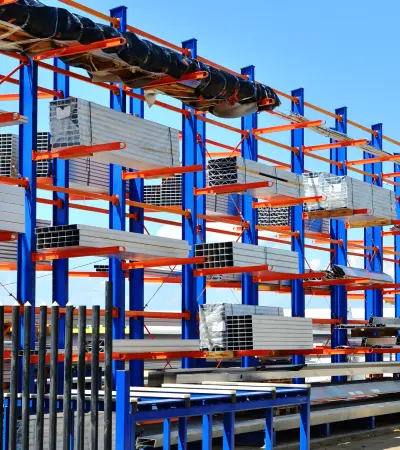
Now, there are other types of racking as well like cantilever racking, mobile racking, double deep racking but pallet racking overcomes them all. Having one along with a combination of one of these is a wise choice.
Factors to consider while buying pallet racking
When it comes to pallet racking, you need to assess a couple of important factors before you make a decision of buying one.
Here are the factors that you simply cannot miss while purchasing pallet racking for your warehouse:
Know your warehouse dimensions
It’s important to know your warehouse measurements for an accurate racking system. Some of the measurements you must know:
- Ceiling height:High ceilings accounting for 7.5-12+ meters allow for vertical VNA (very narrow aisle) in setup.
- Floor space: Under 1,000 square meters allows drive-in or push-back racking for maximizing storage operations.
- Aisle width: Standard counterbalance forklifts require 3.6-meter aisles, while narrow-aisle reach trucks need just 2.4-meter aisles
Additionally, take accurate measurements of all door openings, dock loading areas, and emergency exits.
Types of pallet racking
When you consult with a supplier, the first question they will ask is about the specific types of pallet racking your operations require.
Hence, you need to make sure that you know about them. Here are some of the popular pallet racking types:
- Selective pallet racking: Providing direct access to every pallet, best for retail warehouses and general storage.
- Drive-in and drive through racking: Drive in best for non-perishable goods, like cement, brick while Drive through best for perishable goods like food, drink or chemicals.
- Push-back racking: Uses inclined rails perfect for medium turnover inventory.
- Double-deep pallet racking: Stores pallets two deep instead of one, increasing storage density while reducing immediate access to every pallet.youtubednc-automation.
- Pallet flow racking: Uses gravity rollers so pallets move from the loading side to the picking side, which makes it well-suited to FIFO stock.
- Mobile pallet racking: Places racks on movable bases so you can reduce aisle space and increase storage capacity while still keeping access to pallets.
- Pallet shuttle racking: A semi-automated high-density system that uses a shuttle to move pallets within the lane, and it can operate in FIFO or LIFO depending on the layout.
- Narrow aisle pallet racking: A selective-racking variation designed to reduce aisle width and improve space use, typically with specialized handling equipment.
- Wide aisle pallet racking: A more conventional selective setup that offers simple forklift access and flexibility across mixed SKUs.
Pallet dimensions
With warehouse dimensions measured and kept in place, it’s time for the pallets to be measured to ensure we get a correct racking system.
- Pallet width: The width of the pallet dictates the beam length. The standard Australian (CHEP) pallet size is 1165mm x 1165mm. Having a standard beam with 75mm clearance helps.
- Pallet height: We definitely don’t want our forklift operator to smash the upper racks while carrying out operations, correct pallet height ensures a minimum of 150mm is to be left above the top of our product.
- Pallet weight: It helps us have the correct steel thickness. With weight ranging from 500kg to 1500kg, a standard lighter or heavy duty roll-formed steel is used.
Warehouse layout and future plans
While installing pallet racking, it’s common to just think of the immediate setup and rush through without thinking of future options.
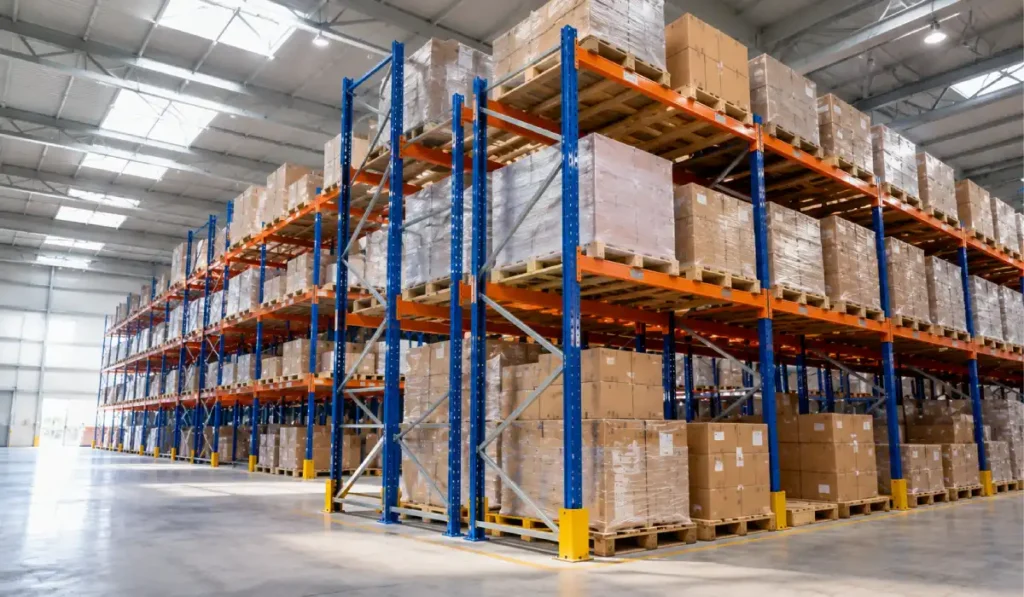
- Different zones: Receiving and dispatching areas are the most prone to change in the future. Plan accordingly for these zones.
- Racking orientation: A properly planned layout ensures your racks are oriented to provide workers with safe emergency exit routes.
- Long-term plan: Plan for scalable growth. As your business expands, your storage requirements will increase.
You can now see the benefits of pallet racking are immense, and it doesn’t make any sense not to have one. If you want to have a perfect pallet racking installation guide for your operation, don’t hesitate to reach out to our experienced team at Gold Coast Racking. We will not only make sure you buy the best pallet racking QLD, but also promise to correctly navigate you through the entire process.
Conclusion
Feeling overwhelmed with all this information? Don’t worry, purchasing the right pallet racking system often requires a good amount of time. Assess your warehouse measurements, understand the pallet racking mistakes that you need to avoid, and come up with a layout system that suits your inventory best.
In the end, the right pallet racking solution should support both your current workflow and your future plans. When chosen properly, it can help maximise storage capacity, improve accessibility, and create a warehouse layout that remains practical as your business evolves.
Frequently asked questions
What should I consider before buying pallet racking?
You should consider load capacity, warehouse layout, pallet dimensions, types of pallet racking, future expansion and overall storage requirement
What type of pallet racking is best for my storage needs?
The best system depends on your inventory, stock rotation, warehouse space and type of goods.
How much does pallet racking cost?
The best system depends on your inventory, stock rotation, warehouse space and type of goods.
What is the difference between selective and heavy-duty pallet racking?
Selective racking offers easy pallet access, while heavy-duty racking is mainly used for supporting heavier loads for industry usage
Can pallet racking be customised for different storage requirements?
Yes, pallet racking can be customised with different sizes, configurations, load capacities, and accessories.
How do I know if pallet racking meets safety standards?
You can verify manufacturer certifications, ratings, and see the compliance with local warehouse safety regulations.
Where can I buy high-quality pallet racking?
You can either get them online from reputable suppliers such as our trusted Gold Coast Racking offering certified products.