
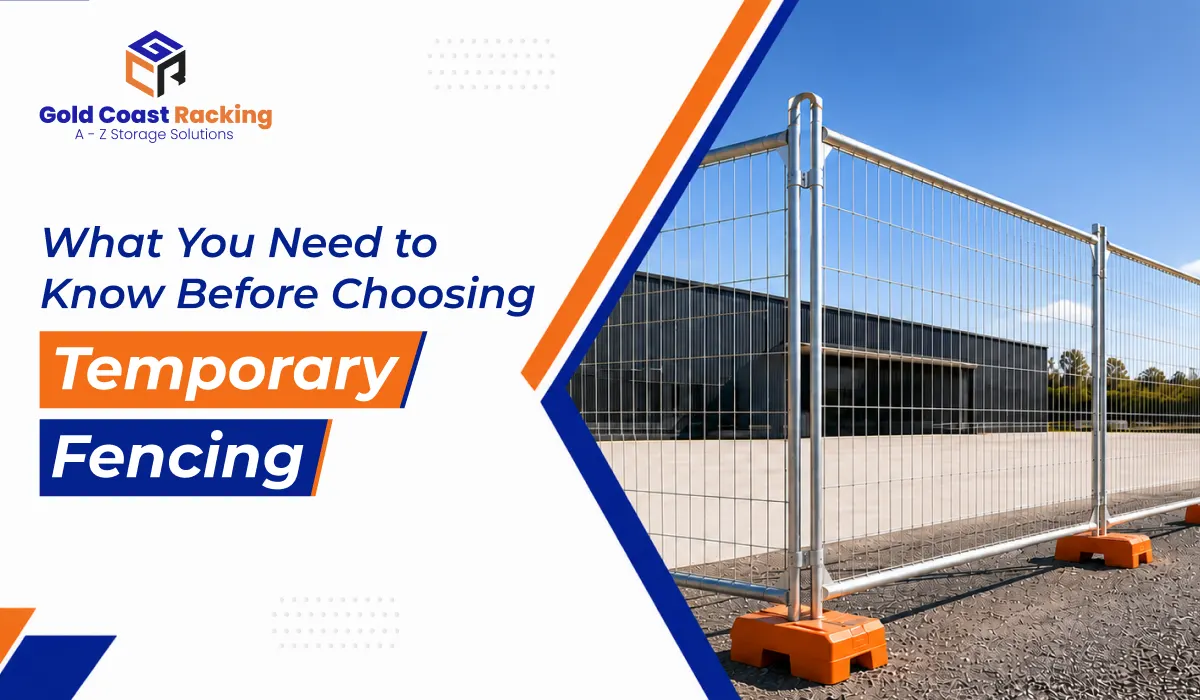
You are starting a new on-site project. All the machinery is bought, the crew is hired, and the work-schedule is set. But what about the site’s security?
That’s when temporary fencing helps you take the load off of your shoulder by providing safety and security. A lot of site operators rely on temporary fencing for their safety needs. But when you are buying them for the first time, it’s natural to have questions about their types, components, and regulatory requirements
Well, don’t worry. This temporary fencing made simple guide is going to answer all your questions about them. So without further ado, let’s start:
Key takeaways
- Temporary fencing effectively protects construction sites, residential areas, and events from unauthorized access.
- Choosing the correct fence type ensures maximum safety, compliance, and cost efficiency.
- A thorough pre-installation checklist prevents costly mistakes, legal issues, and dangerous installation site conditions.
- From chain link to vinyl panels, temporary fencing suits every need and budget.
- Properly installed temporary fencing delivers strong perimeter security without the cost of permanent structures.
What is temporary fencing and its components?
Have you ever needed a temporary barrier that can temporarily secure your construction site, event, or backyard? Temporary fencing is what helps you in these situations.
Temporary fencing is a system of barriers that can be easily installed, removed, and relocated. Unlike permanent fencing, installation of temporary fencing doesn’t require any heavy construction work.
Wondering what are the benefits of temporary fencing? Read here.
These fencing systems are made up of primarily 4 parts: Panels, bases, clamps, and bases. Let’s take a look at each of them in detail:
1. Panels
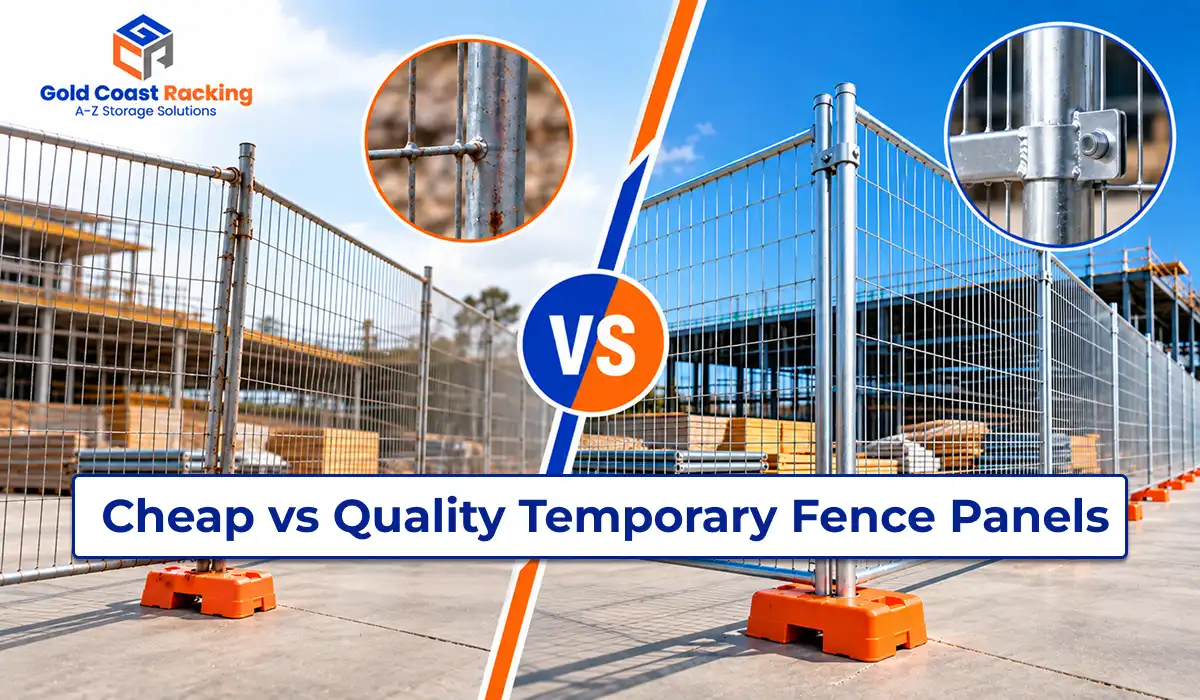
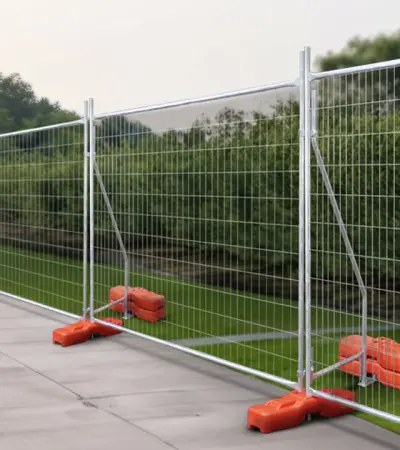
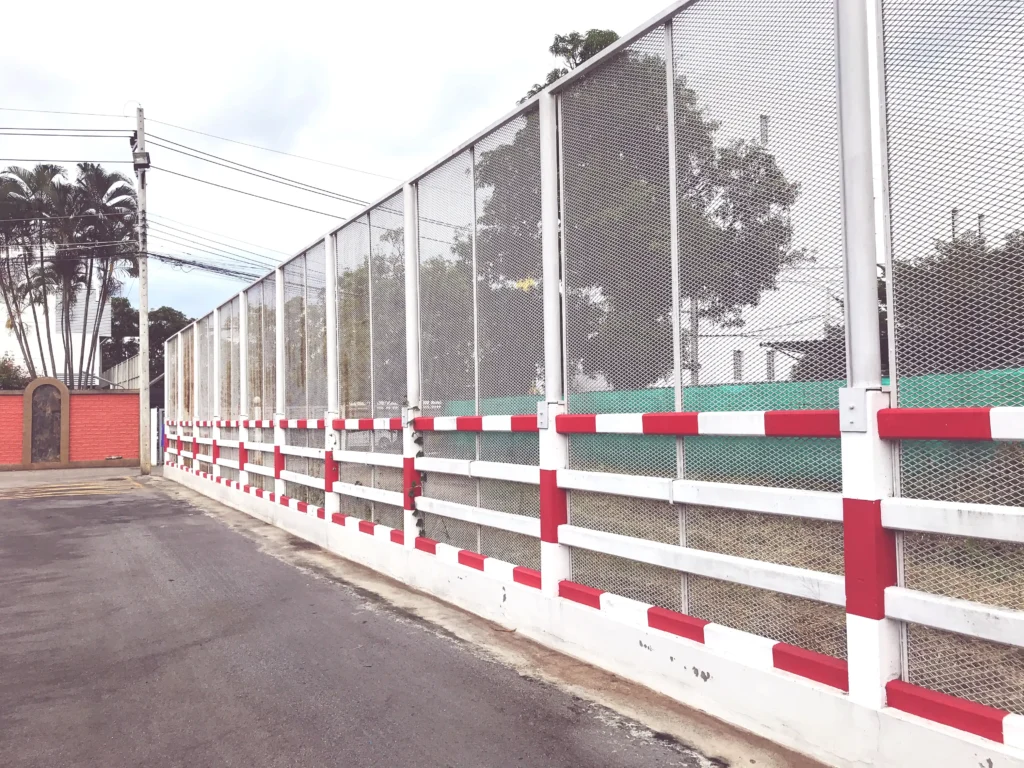
Panels are the most visible part of your fencing solution and the ones directly responsible for the security of your site. Temporary fencing panels are made up of either galvanised steel, aluminum, or powder-coated steel.
2. Bases
Bases are the main source of support for your fencing solution. You can get either empty bases or concrete-filled ones that offer more stability.
3. Clamps
Clamps are little steel components that are fastened around two panels through nuts and bolts. They keep your panels together and provide added stability to the panels.
4. Stays
In case your fence panels need additional support to stay upright, stays are there to save the day. They are connected to either one side of the panel or behind it to provide extra support.
What are the different types of temporary fencing in Australia?
Depending on your needs, you can choose from a variety of temporary fencing. Some of these are made for security, while others offer visibility and easy monitoring of the area.
Here are the 3 main types of fencing that is commonly used at construction sites or other temporary projects:
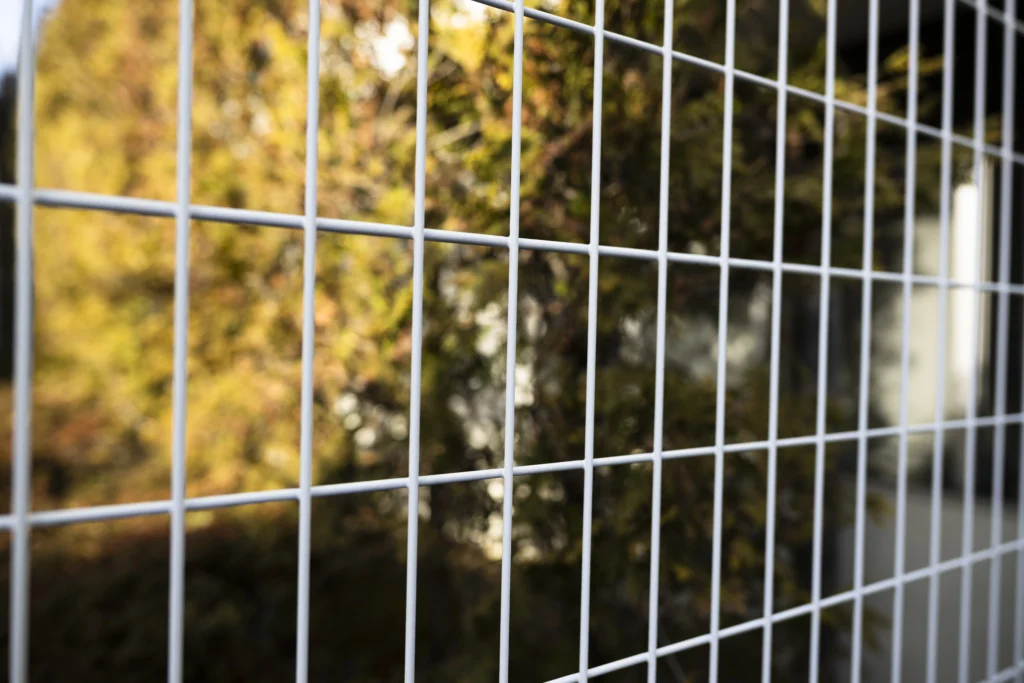
1. Mesh wire temporary fence panels
These are rectangular panels made from meshed steel wires. Rather than being fixed on the ground, they are supported by an empty or a concrete-filled base.
This feature makes them a favourite for projects that require frequent reconfiguration. These fence panels are sturdy and can withstand harsh weather conditions.
2. Chain link temporary fencing
Chain link temporary fencing system offers a more stable, secure, and durable fencing solution. This fencing includes posts secured in holes dug in the ground and galvanized steel wires joined together vertically in a zig-zag pattern, forming a diamond shape.
You will commonly see this kind of fencing securing a sports field or enclosing an industrial area.
3. Crowd control barriers
Unlike temporary fence panels and chain link fencing, crowd control barriers are not used for security purposes. Rather, they are used to guide or restrict people at an event or a project site.
These are shorter in height than regular fencing. They are designed with hot-dipped galvanized steel to provide durability and efficient crowd control.
What type of temporary fencing is best for my needs?
With 7+ surprising uses of temporary fencing, the choice depends entirely on what your goals and purpose is. Here’s a detailed breakdown of which one you should choose depending on your needs:
| Purpose | What you need | Temporary fencing you should choose |
| Construction sites | Keeping unauthorized individuals away from the site.Security against theft and vandalism.To redirect pedestrian foot traffic away from ongoing dangerous construction work.To meet legal requirements. | Chain link temporary fencing for high-level security.Temporary fence panels for regular reconfiguration needs. |
| Events | Portable temporary fencing for quick set-up. Effectively managing long queues.Separating VIP areas from public access.Guiding the crowd in a particular direction. | Crowd control barriers for guidance and quick set-up.Temporary fence panels for securing off an area. |
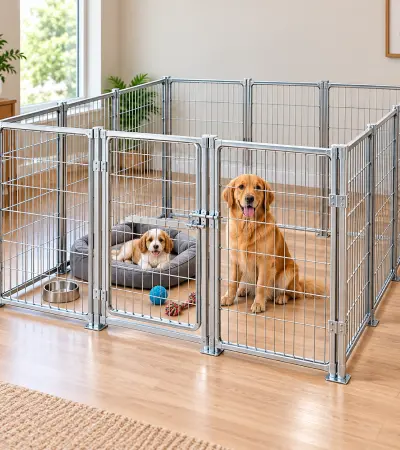
| Residential projects | When undertaking home improvement projects.Creating safe enclosed space for pets.Securing lawns and flower beds.Marking clear property lines. | Temporary pool fencing.Plastic temporary fencing. |
What are some temporary fencing installation and safety tips?
Temporary fencing offers great benefits for your site. But, if they are not handled with proper guidelines and care, they can result in more stress than convenience.
Here are some safety tips that can help you avoid any issues with your temporary fencing:
- Pre-installation checklist
- Accurately measure the perimeter that needs to be fenced to know the total number of panels and posts required.
- Take into the account the terrain of the area and clear any debris or rocks off the path.
- Take note of obstacles such as trees, utility boxes, drainage points, fire hydrants, or existing structures along the fence line.
- Things to consider during installation
- Maintain consistent spacing among the temporary fence panels and make sure to have uniform gaps.
- Securely attach the clamps and the bases to the panels and double-check the anchors to the ground.
- Make sure to place entry and exit gates at the correct location.
- Meet Australian standards
- Comply with the AS 4687-2022 in terms of wind-load resistance, stability, installation, and maintenance.
- Meet your state’s Work Health and Safety laws (WHS) that dictate fence height (minimum 1.8m), workers’ protection, and regular inspection.
- Secure permits from the local council. These may have specifications for fencing height or placement restriction.
Where to buy temporary fencing for sale?
Queensland has a number of options available from where you can buy portable temporary fencing. But the best option for you is the one that understands your needs and also offers best quality products.
Hence, Gold Coast Racking stands out. Our products are made to meet your requirements of safety, stability, and durability. With us, you’ll get expert guidance and fencing solutions customized to your needs.
Conclusion
It is important to have all your doubts cleared before installing a temporary fencing in the Gold Coast and Brisbane.
That’s because it’s important to have complete knowledge about its components and types to choose the right fit for your site. And although they are easy to assemble and relocate, they require careful installation.
After you have acquired complete knowledge about them, you can buy temporary fencing for sale online in Australia.
Confused which supplier is best for you? Gold Coast Racking offers highest quality products, expert guidance, and customisable options. Book your free consultation call now.
Frequently Asked Questions
1. What is temporary fencing?
Temporary fencing is a movable and freestanding barrier used to secure, define, or restrict access to any area short-term.
2. What types of temporary fencing are available?
Common types include chain link panels, mesh fencing, plastic barricades, privacy fencing, pool fencing, and crowd control barriers.
3. How do I choose the right temporary fencing solution?
Consider your site size, security needs, duration, terrain, budget, and local compliance requirements before selecting the right fencing type.
4. Where can temporary fencing be used?
Temporary fencing works perfectly at construction sites, residential properties, backyard events, festivals, pool areas, and public gatherings of all sizes.
5. Is temporary fencing easy to install?
Yes! Most temporary fencing panels are lightweight, modular, and designed for fast setup without requiring specialized tools or professional training.
6. How much does temporary fencing cost?
Costs vary by type, quantity, and duration. Renting is budget-friendly for short-term needs, while buying suits long-term recurring projects.
7. Where can I find temporary fencing for sale near me?
Gold Coast Racking offers high-quality fencing with customisable options in Queensland, including the Gold Coast and Brisbane.