
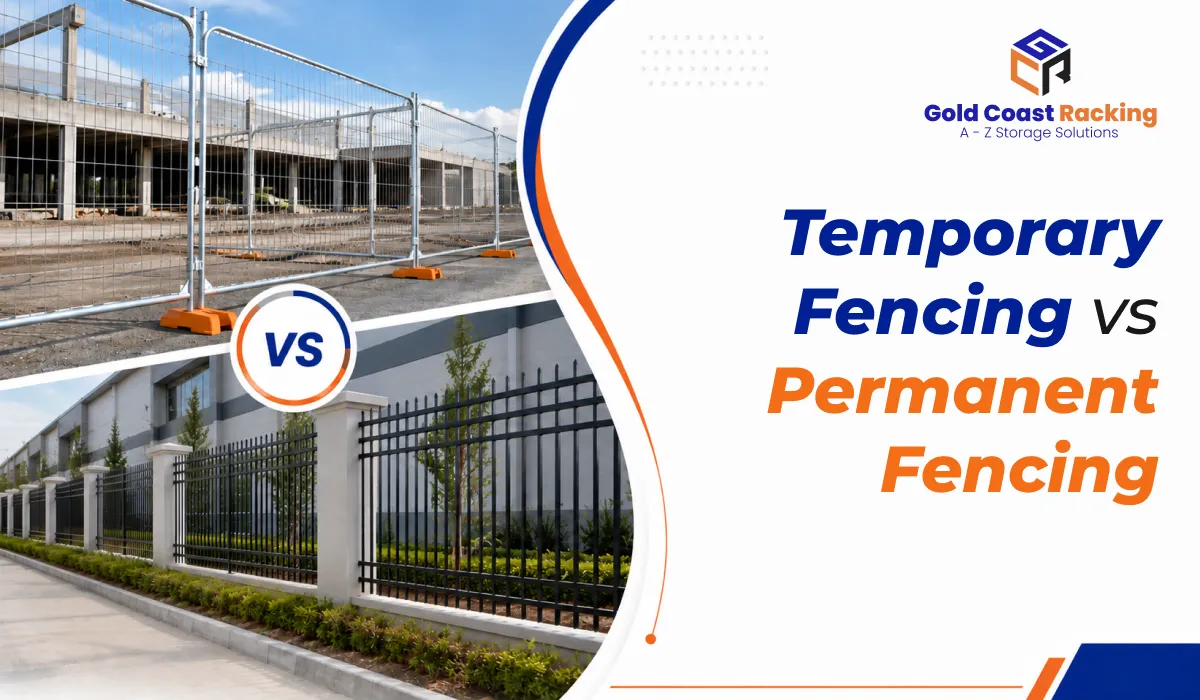
You may have come across barriers at crowd events or panels of wires lining a property or a construction zone. These barriers and wire panels are called fences.
But what does fencing exactly mean? Basically, fencing means installation of barriers to control access or to direct foot traffic in a specific area.
They are broadly classified into two types, temporary and permanent, and each has different applications in different places.
This article will guide you through the different types of fencing and the benefits of temporary fencing and permanent fencing.
Also, it will help find out which is the right choice for property owners and project managers:
What is temporary fencing?
As the name suggests, temporary fencing is a temporary barrier comprising freestanding panels installed for short-term activities. Mainly used at construction sites, inaugurations and public events that require fencing for only a specified amount of time.

The best thing about temporary fencing is that it is easy to install and remove, requires no digging, is available at a cost-effective price, and offers excellent flexibility. If you’ve had a sudden change in layout plans and need to relocate fencing to a new area, choosing to buy temporary fencing in QLD ensures you have a practical and reliable solution that can be repositioned with minimal effort.
You can achieve that easily with temporary fencing panels. But keep in mind, it comes with its own disadvantages, which we will discuss further in the article.
What is permanent fencing?
Permanent fencing serves as the ultimate fixed barrier solution for long-term use. Making use of concrete, steel, vinyl and ornamental iron, it serves as a fixed barrier solution for long-term use.
It is installed in places where the layout won’t change, such as property boundaries, industrial complexes, and infrastructure security. It requires deep digging followed by a concrete mix and wooden braces nailed diagonally into the ground to lock the post position.
Expensive and requiring a significant amount of time, but once done gives long lasting benefits and security, besides aesthetic value to your building.
Temporary or Permanent? Which is a better choice?
Both types of fences come with their own pros and cons. Let’s look at some of the points below to have a deeper understanding:
Purpose
Both fences serve different purposes and have different uses. Temporary is more suited if you are organising activities that will eventually end after a specified time such as concerts or a construction zone. The ground can be cleared off of the fences once the activity is over.
Permanent, on the other hand, is perfect for residential properties and complexes that require construction over a long period of time.
Durability and strength
As you might have guessed till now, the strength and durability properties of these fences are not so different from their names. Temporary fencing cannot withstand extreme weather conditions, is fragile and is not suited for prolonged use.
Permanent, on the other hand, is the epitome of strength. And with the right materials, it can stand years of harsh weather and damage.
Cost options
Strength comes at a price. Permanent fencing provides long-lasting support, high security, and even aesthetic value. While permanent fencing requires a higher upfront investment, it provides long-lasting support and reduces the need for frequent replacements.
On the other hand, temporary fencing is budget friendly. Some companies even offer rental options, making it highly economical for projects lasting just weeks or months.
Aesthetic value
Looks matter wherever you stay. Temporary fences are purely functional and play no role in contributing to the visual appeal. It can even degrade the value of the residential property.
Permanent, on the other hand, offers a wide range of design options, decorative styles and colours which give your property a personality.
Installation process
Temporary fencing provides flexibility and is installed using interlocking panels supported by weighted bases. No digging or advanced installation methods are required. However, avoiding common temporary fencing installation mistakes is essential to ensure the fence remains stable, secure, and compliant throughout your project.
Permanent has a complex installation process taking time and resources. It ensures proper alignment, digging holes and structural stability.
Security level
Security is always a concern in temporary fencing. It can be easily breached and destroyed more easily than permanent fencing, and cannot withstand large crowd pressure.
Permanent is best for high security and a good night’s sleep. With high walls, barbed wires, and electric fencing, you can sleep peacefully knowing your building is protected.
Maintenance and Upkeep Requirements
Another crucial factor to consider when choosing your barrier is the maintenance involved. Temporary fencing is incredibly low-maintenance since it is deployed for short durations or rented, damaged panels are simply swapped out by the provider. You rarely have to worry about deep cleaning or structural repairs.
Conversely, permanent fencing requires ongoing care to maintain its integrity and curb appeal. Depending on the material, you may need to regularly stain timber fences, apply rust-resistant coatings to iron barriers, or pressure-wash vinyl panels. Always factor these future upkeep costs and efforts into your final decision.
The better call
The question of whether temporary fencing is better or permanent depends on your project size, budget and long-term planning. If you are not clear about the layout plan, prioritise saving time and flexibility more, temporary fencing is the way to go. Having a temporary fencing guide also helps.
But if you are up for a long-term project such as building your dream house, and focus on security, strength, and having a robust system, then go for permanent fencing. It may take a little time, but it will be worth the effort.
In case you want temporary fencing that comes with the same strength of permanent fencing, visit our Gold Coast racking website and buy them now!
Conclusion
While choosing, keep in mind the pros and cons of both the fencing types and choose one that suits you well according to your needs and not what your neighbour suggests.
Also, a good choice is a blend of both, like having temporary fencing for construction sites and installing permanent fencing afterwards. Whatever your choice may be, take a look at the installation process to avoid malpractices and other installation mistakes.
Frequently Asked Questions
1. What is the difference between temporary fencing and permanent fencing?
Temporary fencing is generally portable for short-term use, while permanent fencing is fixed and durable for long-term use.
2. When should temporary fencing be used instead of permanent fencing?
Temporary fencing should be used when flexibility and quick setup are more important than durability, like in construction sites and short-term events.
3. Is temporary fencing more affordable than permanent fencing?
Yes, temporary is more affordable than permanent because of its short-term use, while permanent has a higher initial investment.
4. Which fencing option is easier to install and remove?
Temporary fencing is both easier to install and remove as it requires no hard digging and extensive tools, unlike permanent fencing.
5. How secure is temporary fencing compared to permanent fencing?
Temporary fencing provides basic security and deterrence, whereas permanent fencing offers higher protection with stronger materials, ensuring reliability.
6. What are the advantages of permanent fencing?
Permanent fencing has several advantages like enhanced durability, security, better aesthetics, long-term value and customisation options.
7. How do I choose between temporary fencing and permanent fencing?
Choose temporary fencing if you have short -term flexible needs and permanent if you require long-term security, aesthetics and durability, considering budget.
