
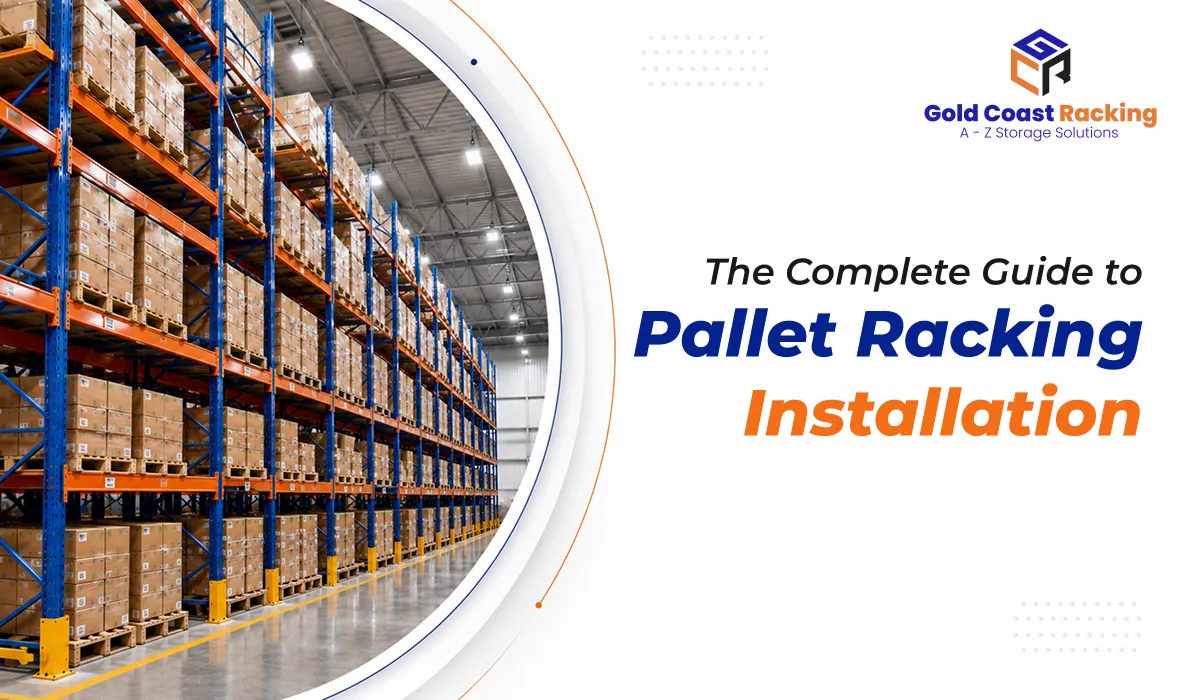
If you’ve taken it upon yourself to assemble a pallet rack for your warehouse, you must be in a lot of confusion right now.
All the parts of a racking system, compliances, and safety rules tend to be a little intimidating. Understanding the cost of pallet racking can also help you make more informed decisions when planning your storage setup. But that doesn’t have to be the case with you too.
A DIY pallet racking installation is possible and can be carried out easily. It’s as simple as marking the positions, lining the uprights, and fixing the beams.
But you have to be constantly cautious of your safety and proper stability of the structure. To ensure proper installation, all you need is a detailed step-by-step guide explaining the entire procedure:
Key takeaways
- Gather all tools and safety gear before beginning any pallet rack installation.
- Stand uprights first, secure beams next, and anchor only after full alignment is confirmed.
- Safety clips and drop pins prevent accidental beam dislodgement during daily warehouse operations.
- Never anchor uprights too early. Full assembly must be complete before bolting down.
- Inspect every rack component for damage before installation to avoid structural failure risks.
Pallet rack installation requirements and safety tips
Let’s first understand what is pallet racking? Simply put, it is a storage system consisting of shelves that extend vertically.
But a pallet racking system isn’t made of just uprights and beams. It requires many parts and tools such as anchors, drills, and safety clips.

Before you dive headfirst into the process, take some time to gather all the things mentioned below at one place:
1. Pallet rack anchors
The stability of your entire pallet racking system depends on these tiny nuts and bolts. They anchor the uprights firmly to the floor. Consult with your supplier while buy pallet racking in qld and get the size of nuts and bolts compatible with your uprights.
2. Pallet rack safety clips and beam safety drop pins
After the beams are properly fitted into the uprights, you need pallet racking accessories such as clips and pins to secure them. They provide an added level of stability to the beams. Skipping them wouldn’t be a wise decision if you want to store the rated capacity weight without any worry.
3. A power drill and a vacuum
Do not forget to get a power drill before you start the installation. And yes, you need a vacuum too. That’s because when you drill a hole for anchoring the uprights, you will need to vacuum those holes to get out all the debris.
4. A mallet
Somewhere along the installation process of pallet racking, it may happen that some beams or mesh panels are not sitting right. In that case, you require a mallet to give them a push. But remember to use a rubber or a wooden one and do not use too much force.
5. Safety gear
The biggest mistake people make while installation is treating safety gear as optional. The process is already a risky one, so do not make it even more dangerous for your staff. Get hard hats, heavy-duty gloves, and visibility vests for maximum safety.
And if you are looking for a supplier to get your racking components from, Gold Coast Racking would be your best choice. We also provide installation services that are quick and efficient.
Pallet racking installation step-by-step
Contrary to what you may think, installing pallet racking is not that difficult. You just need to choose the right pallet racking for your warehouse and follow the below given steps:
1. Pre-installation preparations
The first step in installing pallet racks is to review your floor conditions. Make sure to choose a place which does not have slopes or uneven levelling. Next, mark the exact positions your upright is going to stand on with chalk lines. Keep in consideration the distance of the wall and pallet storage racks from all sides.
2. Stand the uprights
Once you are done with marking the positions, it’s time to get those uprights standing. Take an upright to the first marked position and lift it vertically. Then, place the 2nd upright exactly at the specified bay width. Do not anchor these uprights yet.
3. Secure the beams
Start with the rear beam first. Fit it into the upright holes at the desired height. Some pallet rack beams come with built-in hooks and locking mechanisms while others require nuts and bolts. If you’re working with the latter, make sure to tighten the bolts securely. Then, attach safety clips and drop pins. Repeat the same for the front beam.
4. Set-up 2nd bay
Now to assemble the second bay, fit another beam into the upright side you want to expand the system in. Then place the 3rd upright where the beam ends and join them. Continue this for the whole system.
5. Check alignment
After you are done with fixing all the pallet rack beams and panels, check the alignment of the layout. Take in consideration the spacing between two upright rows and the beam levels and make final adjustments in case of any discrepancies. You can use row spacers to make sure equal spacing among uprights.
6. Anchor the uprights
Lastly, anchor the uprights to the floor. For this, drill into the upright holes. Before fixing the bolts, clean the area with a vacuum. This makes sure there isn’t any debris left which can loosen the nuts. And voila, your pallet system is installed!
Common pallet racking installation mistakes to avoid
When it comes to your storage unit, there isn’t any room for mistakes. One wrong move can affect the stability of your entire racking system and in turn the safety of your staff.
Save yourself the hassle and do it right the first time. Here are some common mistakes you should look out for:
- Anchoring too early: Do not rush to anchor the uprights to the floor. Take your time to check the alignment and then move on to anchoring.
- Ignoring minor lapses: Small mistakes compound over time. Even a little misplacement of an upright from the marked position can misalign your entire warehouse pallet racking structure.
- Not inspecting the parts: Before starting the installation, layout all the beams, uprights, and panels. Inspect them carefully and if any damage is found, replace immediately.
- Skipping safety gear: This is probably the most dangerous mistake you can make. Make sure to wear all the safety equipment like hat, vest, and gloves.
Conclusion
Having questions about pallet racking and its installation process when you are dealing with it the first time is natural. We’ve walked you through a complete guide on how you can install a pallet rack storage system by yourself and tried to solve all your doubts.
But while DIY installation is manageable, we recommend you to call professionals for larger projects. That’s because proper measurements and placement is crucial for the durability of your racking structure.
Remember – picking quality parts will result in long-term results that deliver. And choosing the right installation service helps get that quality into action.
Frequently Asked Questions
1. What is involved in pallet racking installation?
Assembling uprights, securing beams, connecting safety clips, anchoring to the floor, and verifying alignment throughout the process.
2. How long does pallet racking installation take?
A basic single-bay setup takes a few hours. On the other hand, larger systems may require a couple of full working days.
3. What tools are required for pallet racking installation?
You need a power drill, vacuum, mallet, safety clips, anchor bolts, drop pins, and appropriate safety gear.
4. Can pallet racking be installed without professional help?
Yes. With the right tools, two people, and careful adherence to the manufacturer’s installation guidelines and safety standards, self-installation is possible.
5. What safety checks should be completed after installation?
Verify beam alignment, confirm all anchors are secure, check safety clips, and inspect uprights for plumb and level.
6. How do I prepare my site for pallet racking installation?
Clear the area, check floor condition, mark bay positions, ensure adequate lighting, and gather all required tools beforehand.
7. What are the most common pallet racking installation mistakes?
Anchoring too early, skipping inspections, ignoring misalignment, overlooking damaged parts, and failing to wear proper safety gear throughout.
