Introduction
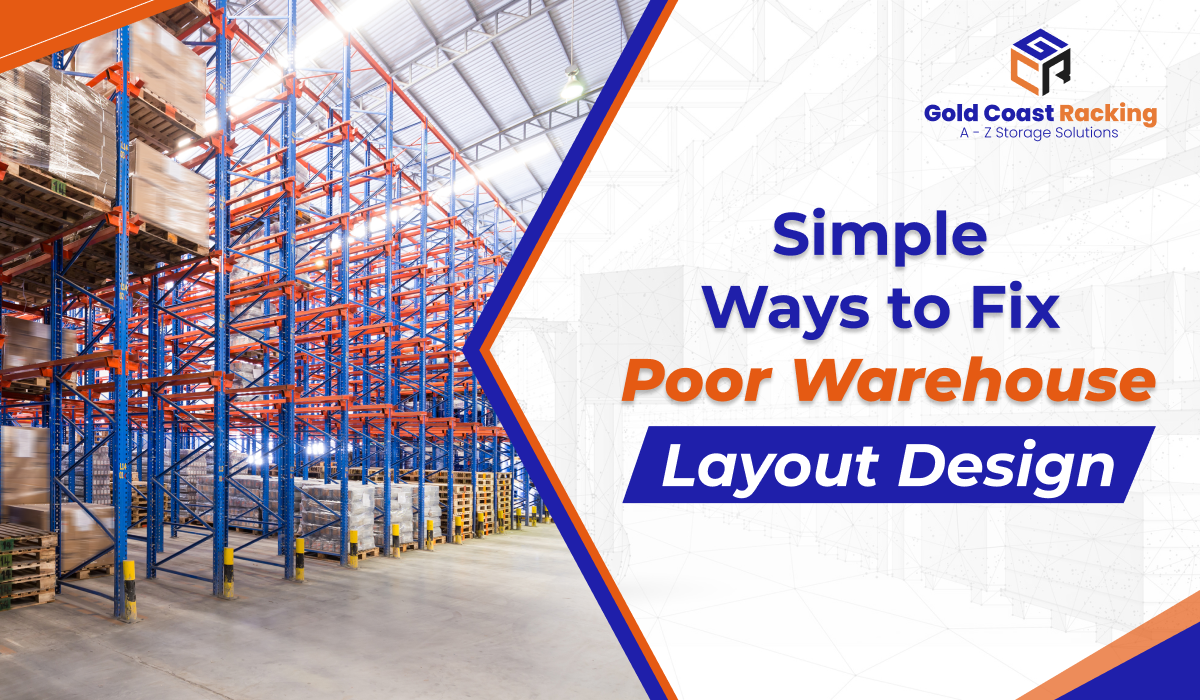
Imagine walking into a fully scattered warehouse where your staff needs hours to locate a single box. The hardship of sorting through the piles of unevenly stacked boxes results in late deliveries and overworked staff.
All of this could be avoided simply by installing pallet racking systems. Because with clearly defined storage lanes, your team can finally work with clarity instead of chaos. A safe and reliable storage system such as this can save your warehouse huge losses.
But if you are still new to this term, you are bound to have some questions. Let’s get started answering some of the more common ones:
Key Takeaways
- Pallet racking is a warehouse storage system designed to hold palletized goods efficiently.
- A load safety sign is essential to ensure operators understand weight limits and safe usage.
- Pallet racking differs from shelving in strength, structure, and the type of goods it can support.
- Though you can install these by yourself, professional installation is highly recommended for safety and compliance.
- Understanding rack vs. pallet differences helps avoid confusion in warehouse planning.
What is pallet racking?
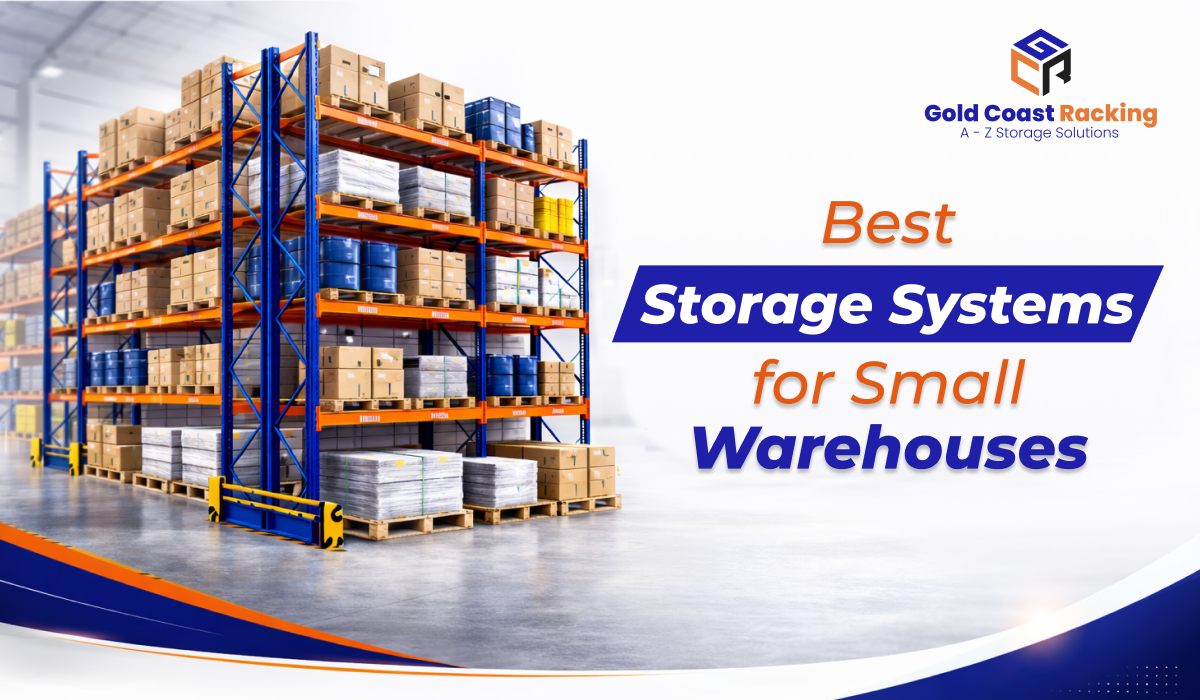
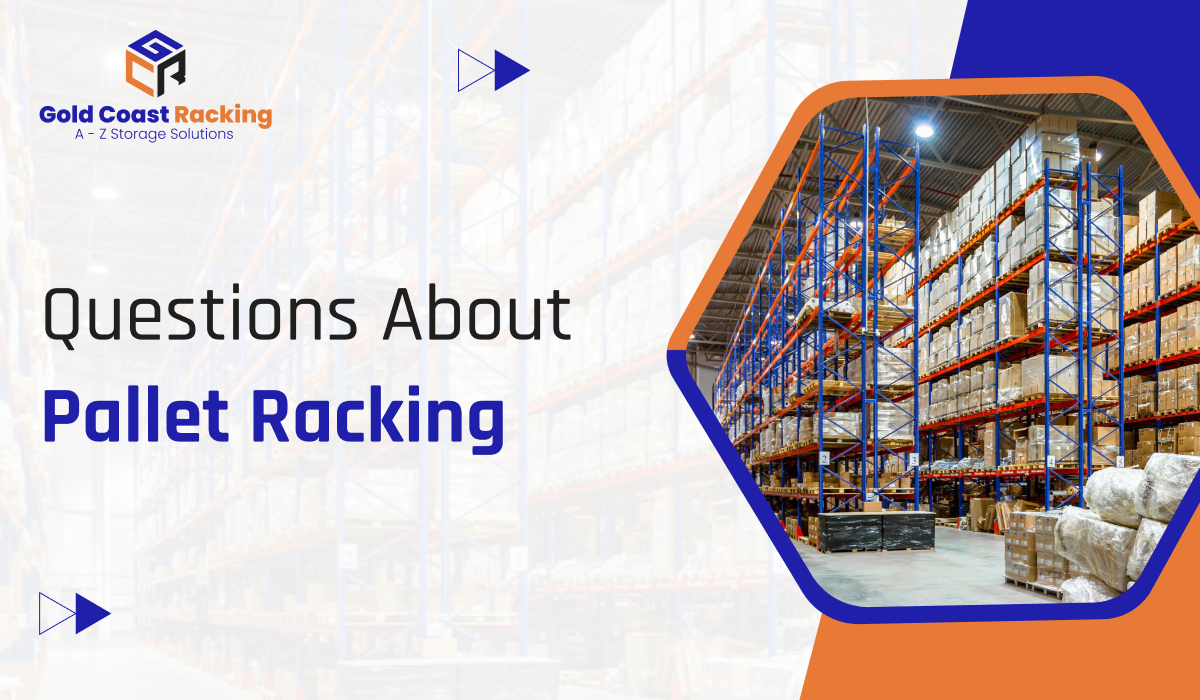
Think of pallet racks like this: Long vertical shelves made of standing frames and vertical platforms. It is designed specifically to hold heavy and a large quantity of goods.
Instead of letting boxes pile up on the floor, pallet racking provides a space to organise them systematically. It can even be customized according to the specific needs of your warehouse.
What is the purpose of pallet racking?
The main purpose is to store goods safely and efficiently while maximizing warehouse capacity. It allows you to use vertical space. This increases the space for storage without the need of actual construction hassle.
Though the main purpose is storage, it also results in many more advantages. It leads to faster retrieval times and smoother workflow. Pallet racking also reduces product damage since goods remain securely supported on beams and decking.
How much does pallet racking cost?
The cost of pallet racking can vary widely. It majorly depends on your warehouse size, storage requirements, and the type of racking system you choose.
Factors such as rack height, load capacity, number of bays, and additional safety accessories also play a role in determining the final price.
Do I need a load safety sign?
This just might be the most important of pallet racking questions. And the answer is yes, you definitely do need to have a load safety sign because of safety purposes. Without a load sign, workers may unintentionally overload the racking system, something that increases the risk of collapse or injury.
This happens because the maximum load that the beam, level, or bay can hold can be known through a load safety sign only. And they also contain safety and prevention warnings.
Even if your racking appears sturdy, different beam lengths, steel gauges, or configurations can drastically affect load ratings. Hence, it’s important that you have a proper sign.
Can I install the pallet racking myself?
While the process can be a little tricky, you can absolutely install it by yourself. Though it may differ with the type of pallet racking, many modern racking systems are designed to be user-friendly. With components that fit together in a straightforward, step-by-step process, they make it easy to assemble.
But before you start your building endeavors, you need to take care of several safety measures. The first step is to check your warehouse for everything from layout to floor conditions.
With proper measurements, levelled flooring, and secure anchoring, a DIY installation can absolutely be done successfully. Just make sure you double-check weight limits and stability as you go.
Although hiring a specialist is highly recommended. Because professional installers use specialized tools, torque settings, and anchoring methods. This ensures the structure meets industry safety requirements.
What is the difference between a rack and a pallet?
Though you might think they are the same, a pallet and a rack are two completely different things. Pallets are a flat, portable platform that hold goods for storage or transport. They are usually made of wood, plastic, or metal. And also allow items to be moved easily using forklifts, pallet jacks, or automated equipment.
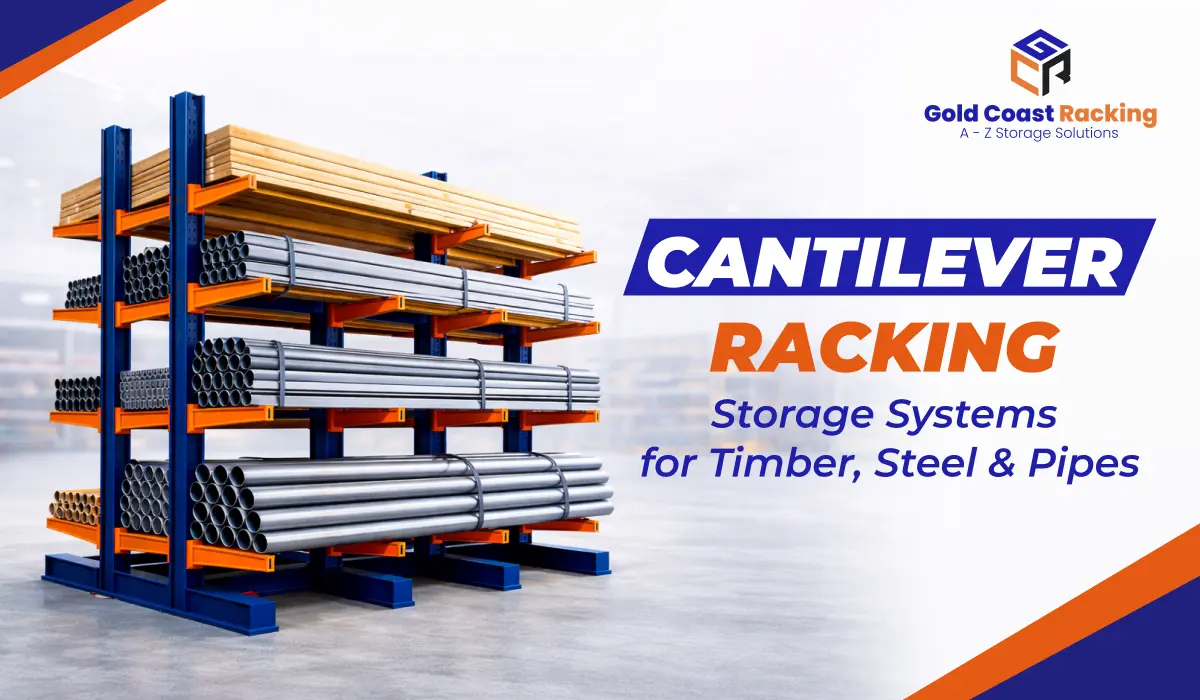
On the other hand, racks are the fixed structural framework used to store those pallets. They are basically the backbone of the system across which pallets are fixed. They consist of frames, beams, bracing, decking, and safety components that create multiple storage levels.
Think of a pallet as the ‘container’ and a rack as the ‘shelf’ that holds that container.
What is the difference between pallet racking and shelving?
The difference between the two lies in their purpose and load-bearing capacity. Pallet racking is engineered specifically for heavy, palletized goods. It also requires specialised machinery like forklift for loading and unloading.
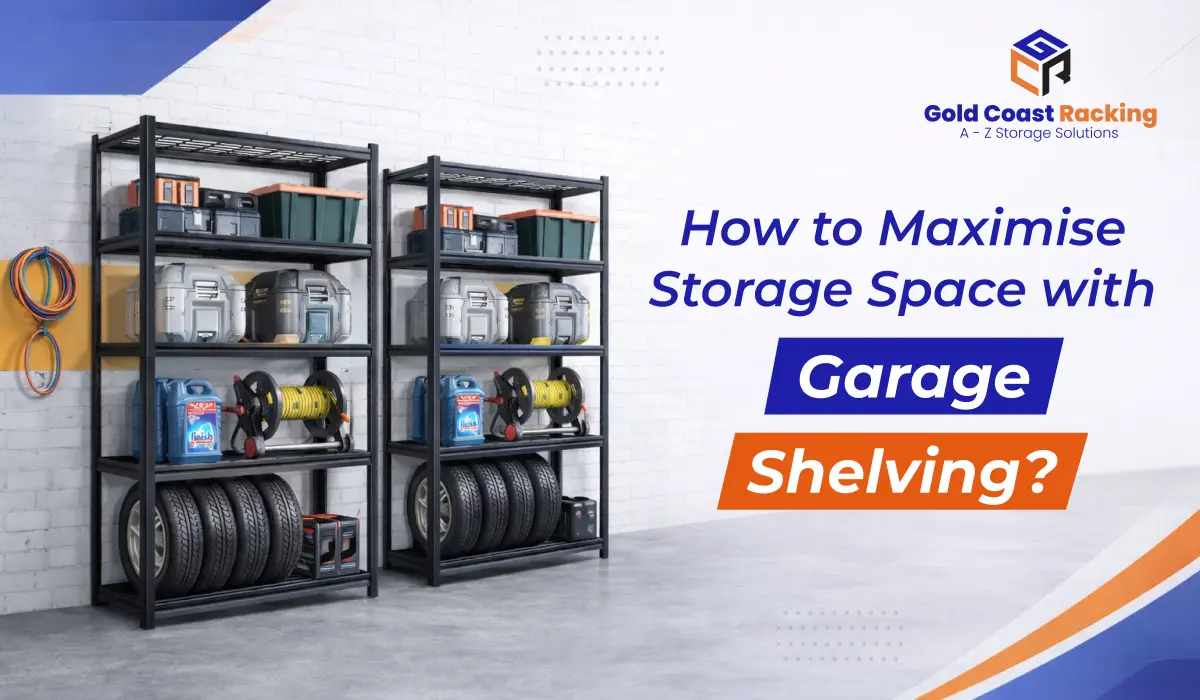
In contrast, shelving is typically used for lighter items that can be picked manually. Shelving units are smaller and closer together. They’re designed for hand-loaded goods such as boxes, tools, or small inventory items.
And though they differ a lot, both hold immense importance in specific places. Shelving works well for retail backrooms as well as small parts storage. On the other hand, pallet racking is ideal for industrial environments where bulk storage and high vertical capacity are crucial.
Conclusion
At the end of the day, a warehouse doesn’t need to feel like a puzzle you’re constantly trying to solve. The chaos of your warehouse can be easily sorted through pallet racks. All you need is to have a clear understanding about it.
Now you can invest in the right system for your warehouse. Once your storage is structured, everything else starts falling into place.
If you’re ready to turn your cluttered warehouse into a streamlined, efficient space, Gold Coast Racking is here to help you get started with the perfect racking solution.
Frequently asked questions
1. How long does pallet racking last?
Pallet racking can last typically 10–20 years with proper maintenance and inspections.
2. What materials are pallet racks made of?
Pallet racks are usually manufactured from high-strength steel. So that they provide a sturdy and durable storage solution.
3. Can pallet racking be relocated?
Yes, pallet racking can be dismantled and reinstalled. For safety purposes, make sure it’s done by trained professionals.
4. How often should racking be inspected?
To avoid any accidents, racking should be inspected at least once a year. Or more frequently in high-traffic warehouses.
5. Is pallet racking customizable?
Sizes, beam lengths, and configurations can be tailored to your storage needs.