



Products moving smoothly, workers not hunting for stock, and a clean warehouse? Those are the signs of an efficient warehouse layout.
In the same way, when you walk in an inefficient warehouse layout you’ll see slow pick and pack processes, safety risks, and wasted spaces.
But the good news is that you don’t need to tear down everything and start from scratch to fix your warehouse.
In this blog, let’s discuss how to redesign an inefficient warehouse layout:
Key takeaways
- A warehouse with poor layout slows your pick and pack process, wastes floor space, and costs you more than you think.
- Fixing a poor warehouse starts with mapping what you have before moving a single rack.
- Congested aisles, slow picking times, and hard-to-find stock are the clearest signs of a poorly designed layout.
- Following warehousing best practices means your goods flow from receiving to storage to dispatch without any unnecessary detours.
- The simplest way to improve layout efficiency is smarter SKU slotting and making full use of your vertical space.
How to fix poor warehouse layout
Fixing a warehouse takes a clear approach that starts with what you have and building towards what you want.
Here’s a simple roadmap to help with fixing your warehouse layout design:
Remap your warehouse
Before you move or shift even a rack, you need a plan – start with mapping the existing warehouse floor layout. This typically includes all storage zones, each aisle, and entry point. Look at how stock is actually moving throughout the floor.
The planning reveals a bad material handling flow at a glance. And once you see the problems, you can move towards tackling them with solutions, and at last a remap of the warehouse.
Choose the right storage system
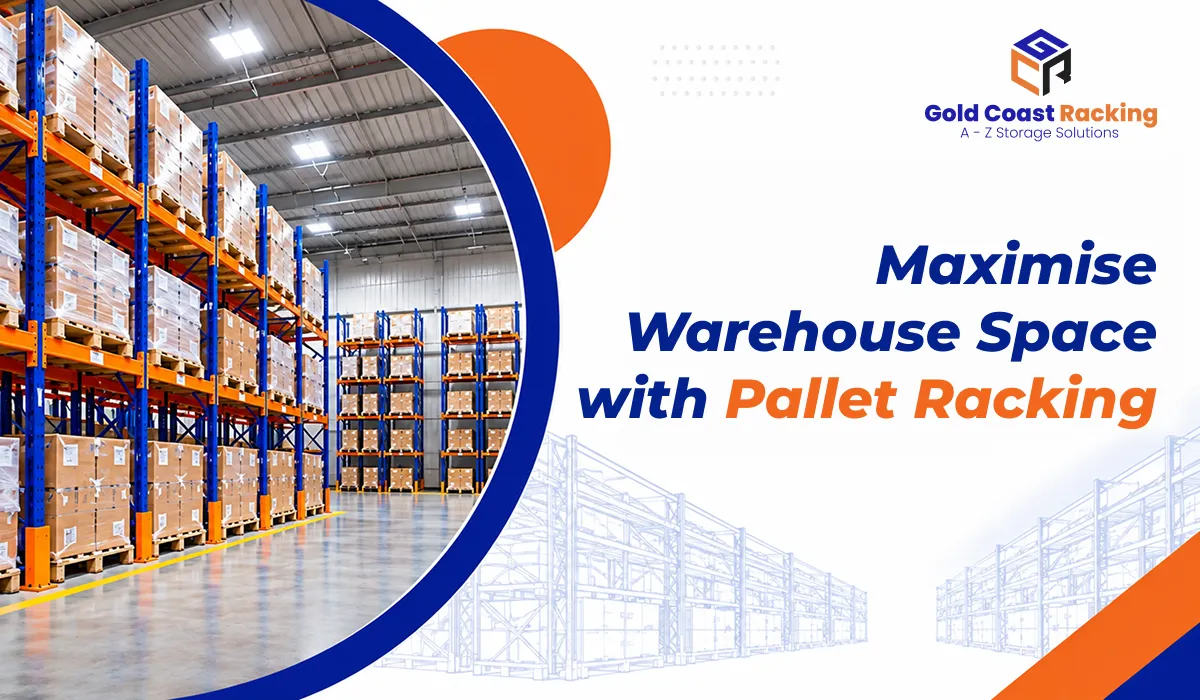
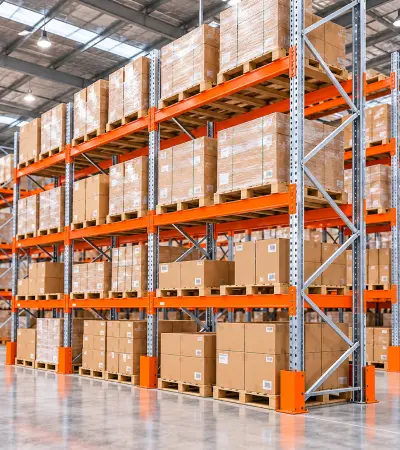
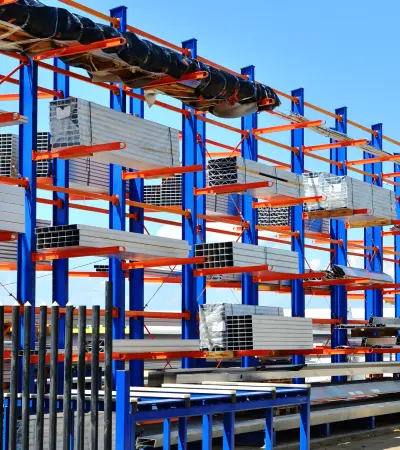
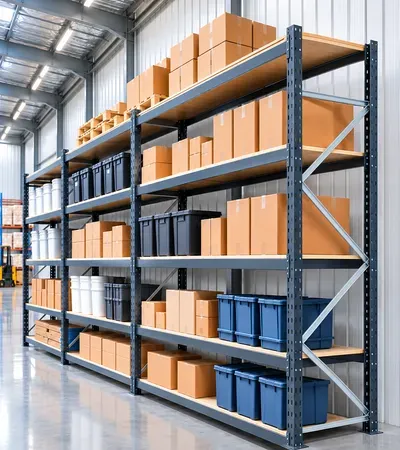
The type of racking you choose eventually forms the foundation of your warehouse space layout. For example, high-SKU product warehousing needs selective pallet racking. They give access to each individual pallet and make for a clean warehouse process flow.
Getting the right pallet racking also helps with aisle width optimization, affects forklift movements, and picking speed. Picking the right storage system also increases efficiency and leads to the best utilization of available space.
Apply warehouse layout best practices
An efficient warehouse design must follow a clear warehouse layout strategy. Inbound goods should flow from receiving into storage, storage flows into picking, and picking happens at dispatch points.
Use storage zone planning to divide the space into different areas. Design your order picking routes so that locating and retrieving takes less time. These practices improve efficiency without adding any space.
Always remember that optimizing the smallest of processes can have a big impact when you look at it from a broader perspective.
Plan for the future
Lastly, you must re-design keeping the future in mind. A warehouse operational layout should solve today’s problems, but should also leave room for growth.
As your inventory expands, your layout must adjust as well, so that you don’t need to remodel every year or two. Analyze data and demand, and optimize accordingly.
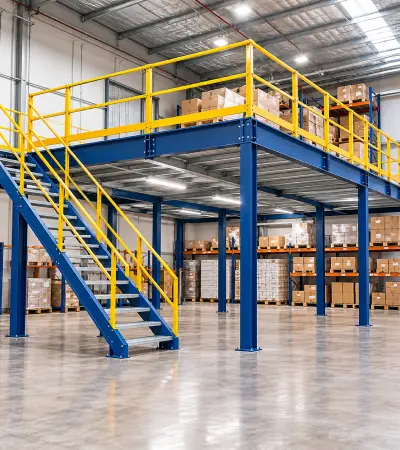
Add in extra floor space if needed. You can also plan for expansion options (mezzanine, re-slotting, extra bays, or additional space) in case growth outpaces the site. Knowing how to make warehouses efficient is a long-term game and not about building a space just for today.
Learn how to optimize warehouse storage with pallet racking by clicking here.
Common warehousing mistakes
You might be making mistakes with your warehouse without even realizing it which may undermine the potential of your firm.
Here are the most common warehouse layout mistakes that businesses make:
Poor space management
This is the mistake that most poorly done warehouses make. Using floor space without making the most of the vertical space leaves a lot of usable height empty and wastes space.
Making the most of vertical height is a simple improvement you can make without moving any existing racks.
Always remember that you can unlock more space and make the most of your warehouse with proper space management;
Not using the right types of racks
Picking the right pallet racking layout for your inventory is the core of warehouse efficiency. Choose one while considering your turnover and type of goods.
If you use drive-in racking for high-turnover SKUs or selective racking for low-variety stock, it creates a mismatch between the storage and workflow. This not only leads to burning cash, but can also leads to waste of precious time and energy
Overloading racks
Does exceeding load limits seem like getting extra space for free? Well, It’s a major warehouse layout problem that can even cause rack collapse. There is a reason why every rack has an optimal load capacity.
Overloading also creates inefficiency as it is harder and slower to pick up stock from overstuffed racks.
Lack of safety measures
Overlooking safety measures can also mean workplace accidents. Narrow aisles with no safety barrier, poor lighting, and absence of proper signage are all signs of poor layout.
In Australia, pallet racks must comply with AS4084:2023 for design, installation, and safety standards.
Conclusion
What most businesses don’t realise is that while poorly organized warehouses are common, they’re also easily fixable.
And no, you don’t need to rent out more space. What you need is smarter use of what you have already.
Start by identifying your workflow and choose the right racks for your inventory. Even small changes in SKU slotting can make a difference in day-to-day operations.
And if you’re revamping your warehouse storage layout in Australia and looking for smarter racking solutions, then Gold Coast Racking is your place to start.
Frequently asked questions
1. What causes a poor warehouse layout?
A warehouse with poor layout is caused by inadequate planning, unsuitable racking and failure to account for warehouse material flow. As business grow, your warehouses might become inefficient too.
2. How do I know if my warehouse layoutis inefficient?
Signs of a poor warehouse layout include long picking times, congested aisles, and hard-to-locate stocks. If your team is spending more time just trying to figure out things, you need a re-design.
3. How can I fix a poor warehouse layoutwithout expanding space?
Focus on making the most of vertical space, getting the right type of racks, and reconfigure your storage zones. Moving your fastest-moving products closer to dispatch can alone improve time taken.
4. What are the most common warehouse layout mistakes?
The most common mistakes warehouses make include poor management of space, wrong types of racks, overloading, and ignoring safety measures. All these undermine your warehouse layout efficiency.
5. How does warehouse layoutaffect productivity?
The layout of a warehouse affects efficiency directly and significantly. It reduces unnecessary movement, speeds up order picking timing, improves handling flow, and reduces the risk of errors.